
Bouclé and Textured Fabric: Where It Works and Where It Just Collects Dust
Why bouclé took over every sofa on Pinterest, which pieces actually earn the texture and which ones regret it within a year, and how to keep a textured fabric looking good instead of matted.
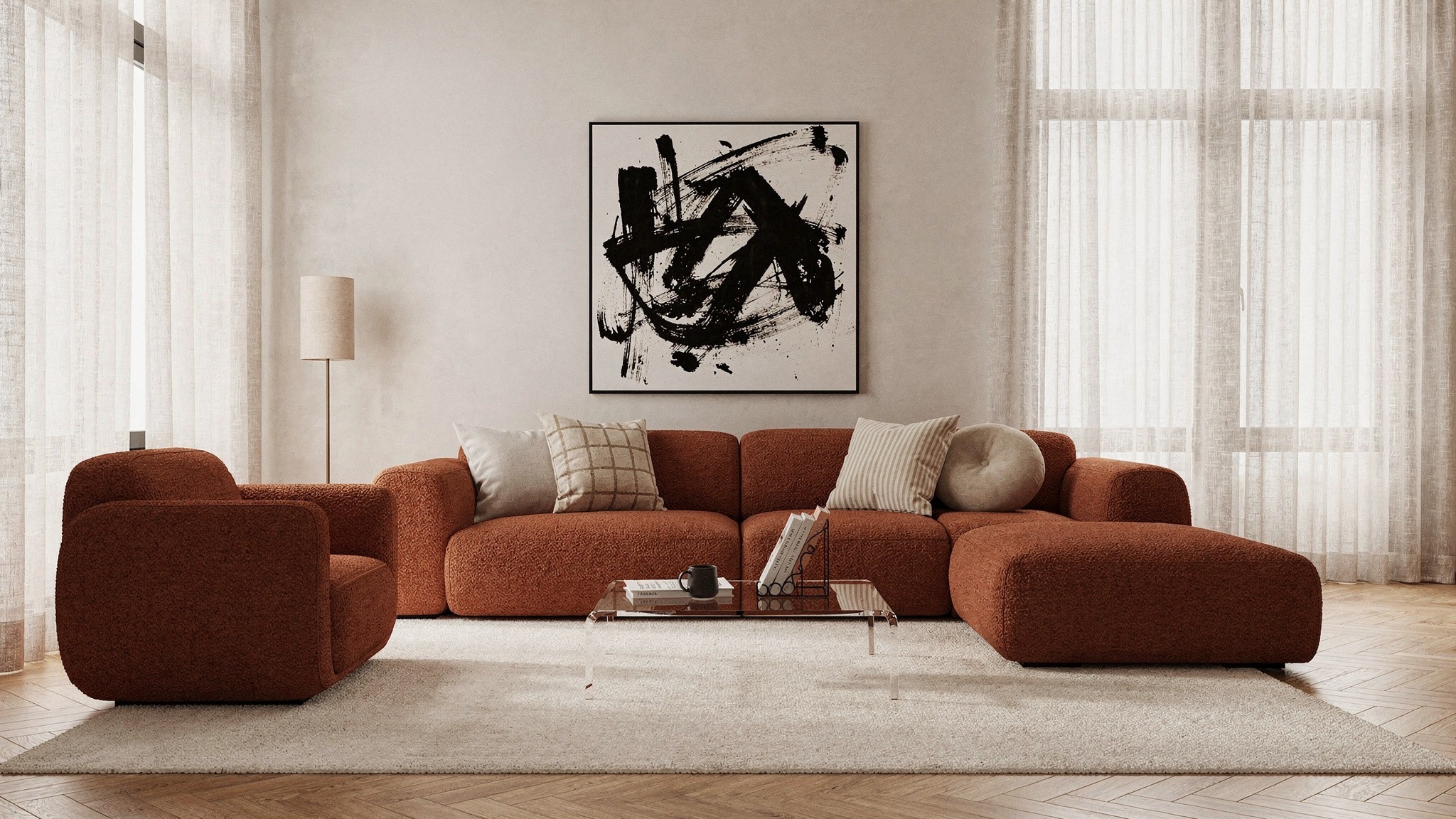
Bouclé was everywhere before most people could pronounce it, and it earned the attention honestly — that looped, nubbly texture catches light in a way flat fabric never does, turning a plain armchair silhouette into something that photographs like a piece of art. It reads soft and structured at once, which is a rare combination, and it’s why nearly every design-led furniture launch of the last few years has included at least one bouclé option.
It’s also a fabric with real limits that Pinterest boards don’t show you. The texture that makes it beautiful is the same texture that traps crumbs, tangles pet hair, and — on lower-quality weaves — mats flat exactly where you rest your arm. Knowing where to spend on bouclé and where to walk past it saves you from a piece that looks worse in eighteen months than the linen sofa you almost bought instead.
Why the texture matters more than the colour
Most fabric decisions start with colour. Bouclé decisions should start with loop density and pile height instead, because that’s what determines how the piece ages. A tight, dense bouclé weave — the kind used on higher-end accent chairs — holds its shape under regular sitting and bounces back after being sat on. A loose, long-loop bouclé, more common on budget pieces, flattens in the seat and arm zones within months and never fully recovers, leaving a visibly worn patch that no amount of fluffing fixes.
Run your hand across the fabric before buying, if you can. A dense weave feels slightly resistant, almost springy. A loose one feels floppy and separates easily when you tug a loop. That five-second test tells you more about how the piece will look in a year than any product description will.
Where it earns its place
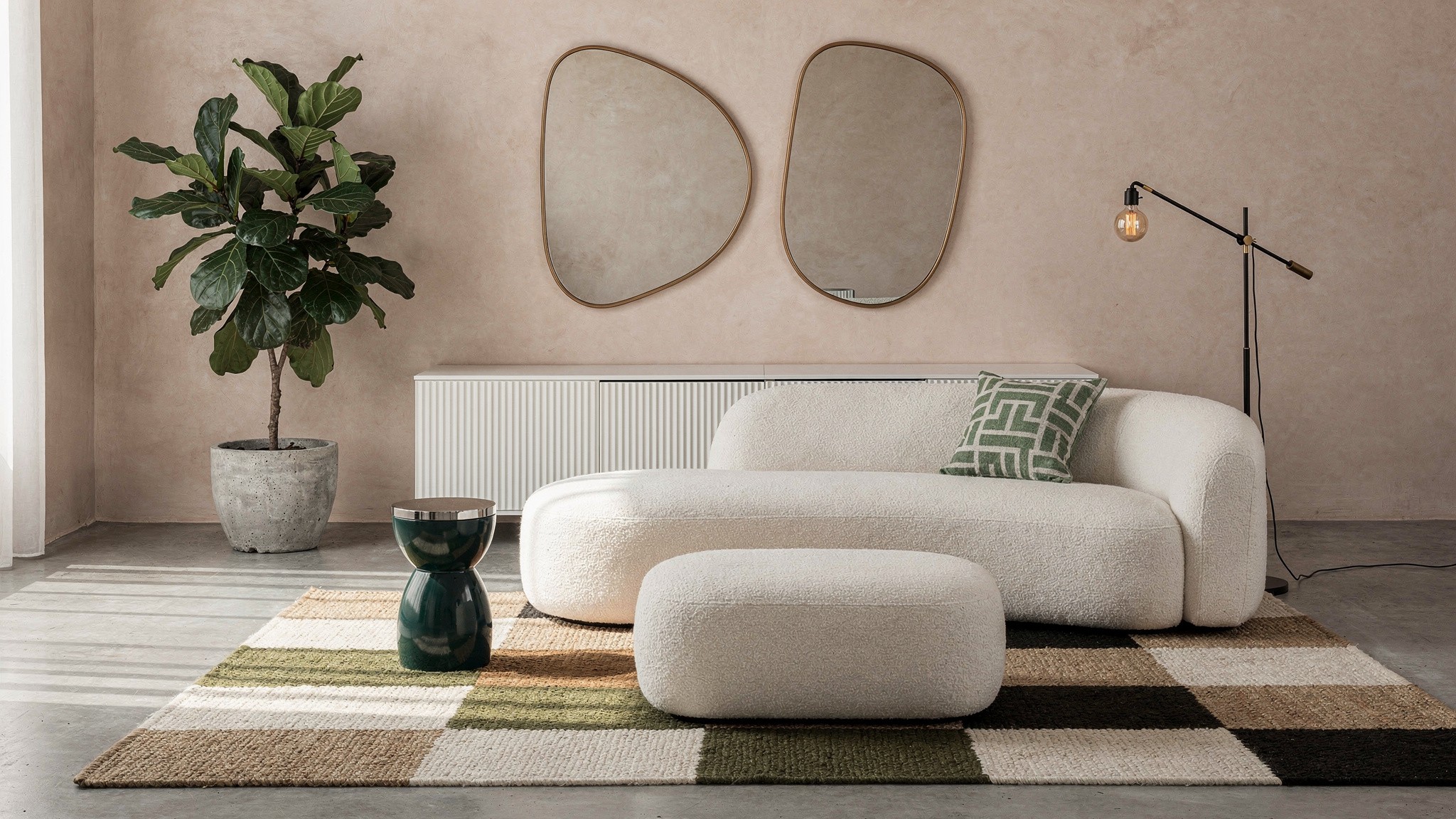
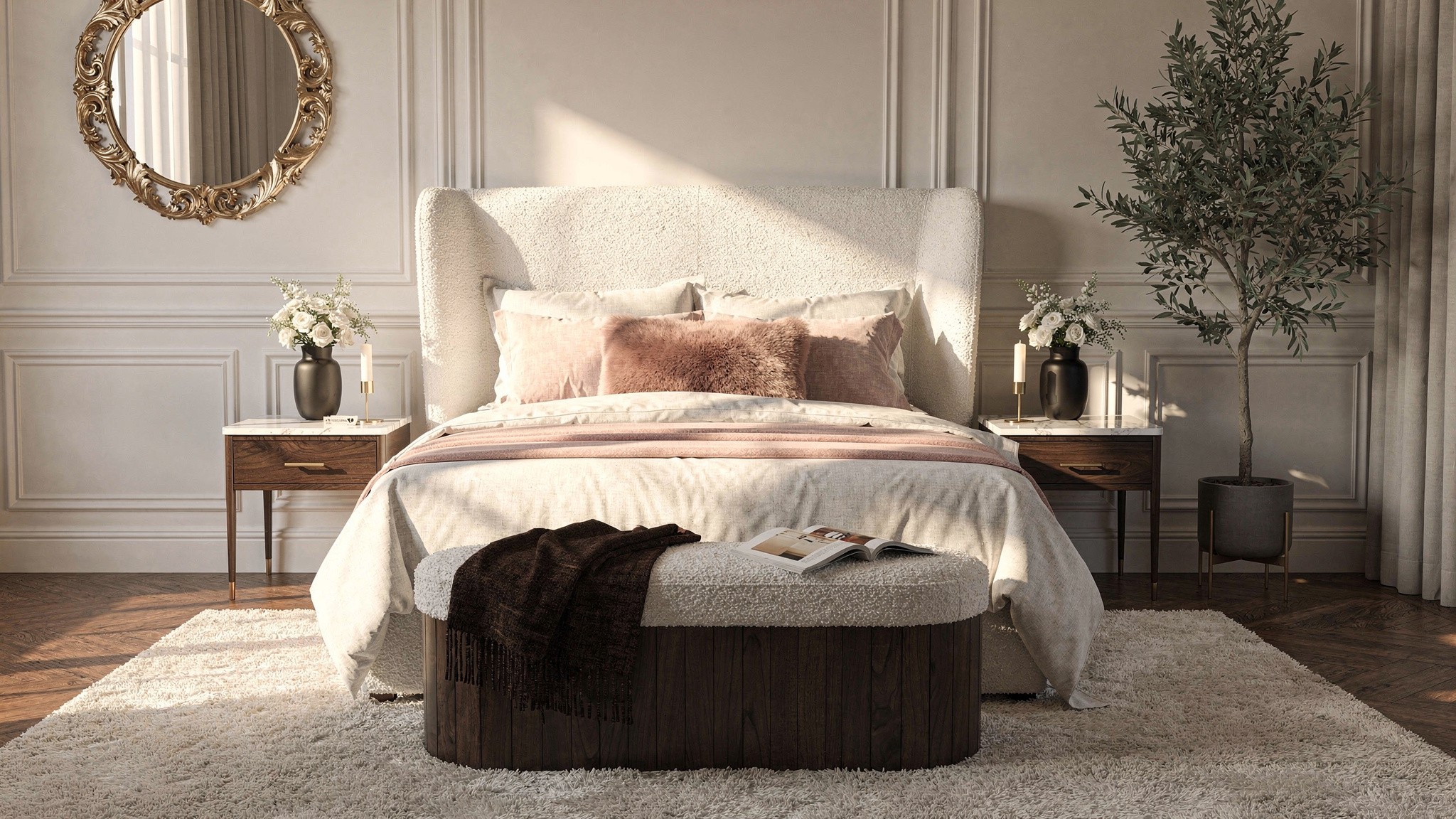
An accent chair is the safest place to start — a piece you look at more than you sit in constantly, positioned somewhere it isn’t taking daily abuse from a full household. A bouclé ottoman or footstool works for the same reason: contact is lighter and more occasional than a sofa seat cushion, and both pieces tend to sit slightly apart from the main seating group rather than absorbing the bulk of a household’s daily wear.
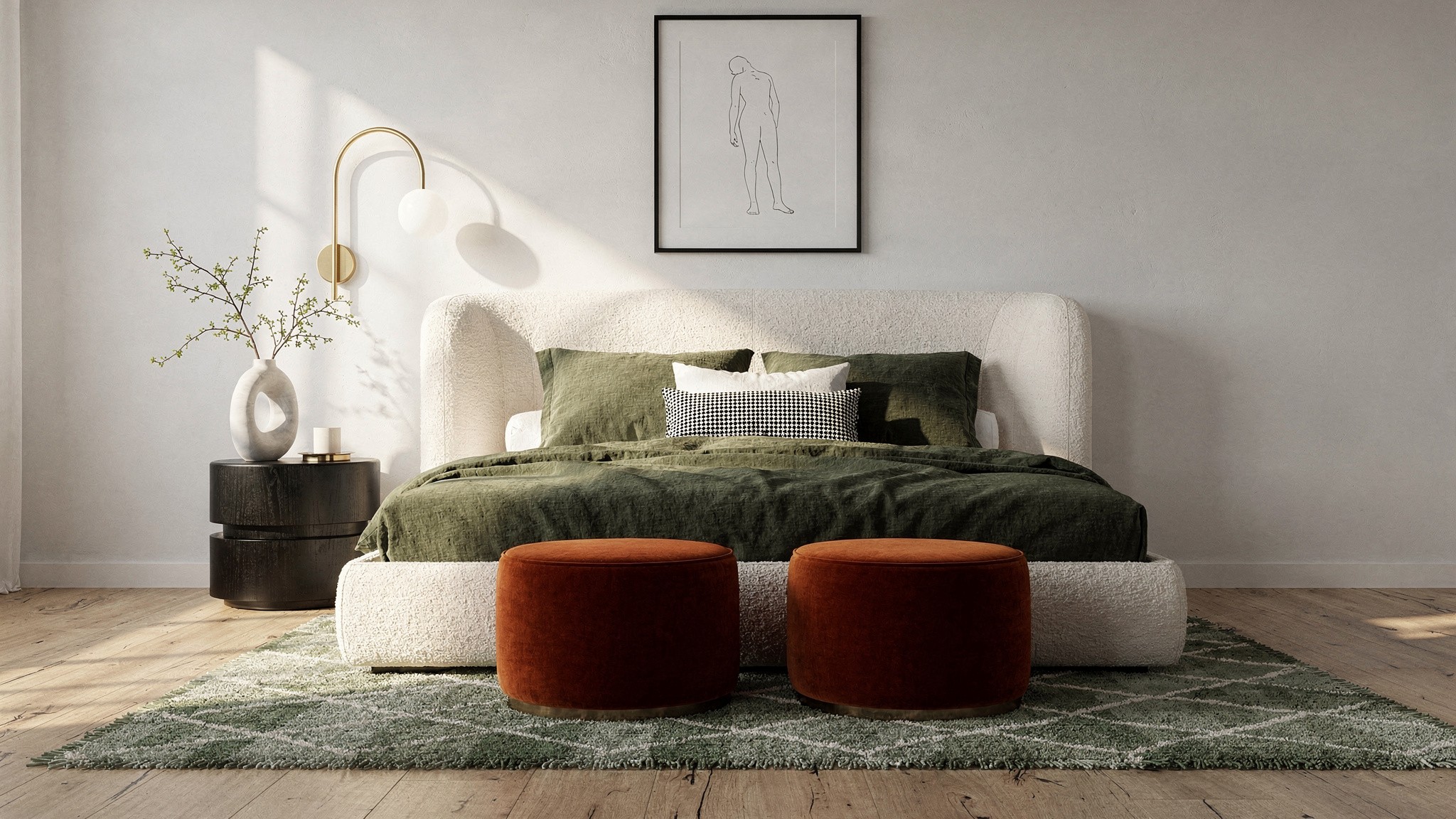
Headboards are another strong fit, and arguably the single best return on the fabric. A bouclé headboard gets almost no direct wear beyond an occasional lean or a shoulder brushing past it while making the bed, so the texture stays fully intact for years, and the softness reads beautifully against bedding in a way flat upholstery simply doesn’t. It’s also one of the few upholstery applications where a long-loop, more decorative bouclé is a completely reasonable choice, because the piece was never going to be subjected to friction in the first place.
Dining chairs sit in an interesting middle ground. Seat pads see regular but brief contact — someone sitting for the length of a meal rather than lounging for hours — which is gentler than a sofa but not nothing. A bouclé dining chair with a removable, washable seat cover is the more practical version of the idea, since it sidesteps the main long-term risk entirely: you replace or clean the cover rather than living with a slowly flattening, increasingly stained fixed cushion.
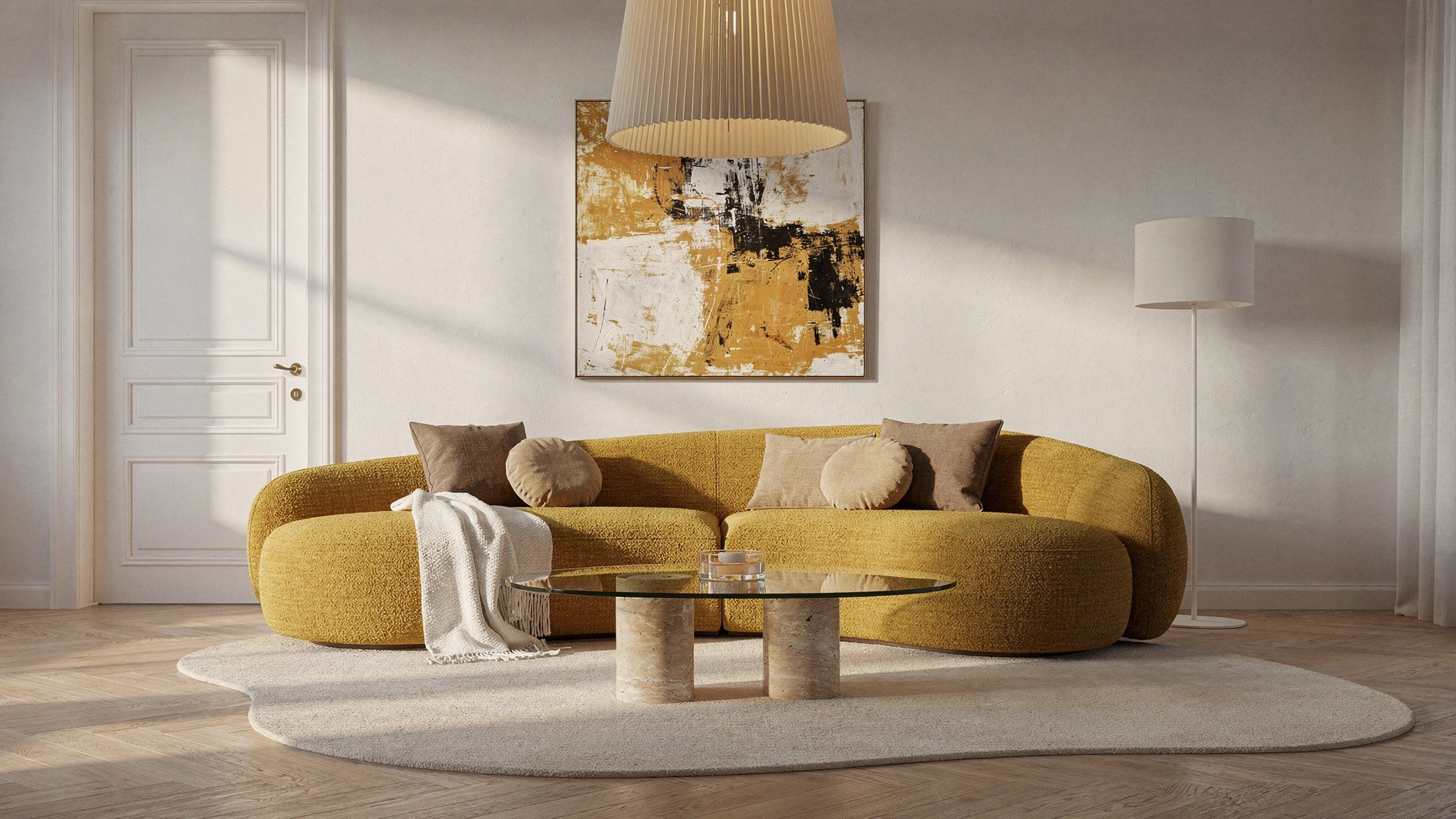
Full sofas are where bouclé earns its reputation the hard way. A sofa in daily use by a family, or shared with a dog or cat, will show wear on the seat cushions and arms well before the back or sides do, because that’s where the friction actually happens — hands gripping the arm to stand up, a body shifting position every few minutes, a dog jumping up in the same spot every afternoon. If you want a bouclé sofa in a high-traffic household, look specifically for a performance-weave bouclé rated for heavy domestic use rather than a decorative-weight version — the difference in longevity is significant even though the two can look nearly identical on a showroom floor under good lighting.
Cushions are the lowest-risk way to bring bouclé into a room that already has a sofa you’re happy with. A few bouclé scatter cushions on a linen or velvet sofa give you the texture in the exact dose that photographs well, without committing an entire large piece of furniture to a fabric that needs more care than most. They’re also cheap enough to replace individually in a few years if the loops do eventually flatten, rather than needing to reupholster or replace a whole sofa.
What it costs to get right
A dense, performance-weave bouclé sold by the metre for reupholstery typically runs €45 to €90 per metre in Europe, depending on the wool content and the brand. Budget bouclé, often a looser weave with a higher polyester content sold under €30 per metre, is genuinely fine for low-contact pieces like cushions or a headboard, but is the wrong choice for anything that sees daily sitting.
Ready-made furniture tells a similar story in the pricing. A bouclé accent chair from a mainstream retailer typically sits in the €250 to €500 range, and at that price point it’s worth checking the specific fabric composition listed in the product details rather than assuming “bouclé” means the same durability across every retailer — the word describes a weave pattern, not a fixed quality standard, and it’s used just as freely on a €150 chair as a €900 one.
Reupholstering an existing sofa frame in bouclé, rather than buying new, usually costs more than expected once labour is included — a three-seat sofa reupholster in a mid-range bouclé, fabric and labour combined, commonly runs €900 to €1,800 across Europe, which is worth weighing against simply buying a new bouclé-covered sofa outright if the existing frame isn’t a piece worth preserving for other reasons.
Living with it
Vacuum bouclé regularly with a soft upholstery brush attachment rather than a standard nozzle, which can snag and pull loops loose. For spills, blot immediately rather than rubbing — rubbing works the liquid deeper into the loop structure and is what causes the flattened, matted patches people associate with bouclé ageing badly. A soft-bristled clothes brush, used in gentle circular motions once every few weeks, keeps the loops standing and prevents the compacted look before it sets in.
Pet hair is the most common complaint, and there’s no fabric treatment that fully solves it — the loop structure is simply good at catching hair the way flat weaves aren’t. A rubber pet-hair brush or a slightly damp rubber glove run across the surface lifts embedded hair far more effectively than a standard vacuum attachment, since the rubber grips the hair fibres rather than just pushing them further into the loops.
Sunlight is a slower but real threat. Bouclé in a natural undyed or pale colourway will yellow slightly with years of direct UV exposure, in the same way any light-coloured natural fibre does. A piece positioned directly in a south-facing window will show this faster than one across the room — if the chair or sofa placement is flexible, keeping it out of the most intense direct light noticeably extends how long the colour stays true.
Three mistakes
Bouclé is worth the reputation it has for making a room feel considered, but it rewards being placed deliberately rather than chosen purely because it’s trending. Put it where contact is light — an accent chair, a headboard, an ottoman, a scattering of cushions — and it will look as good in three years as it does on day one. Put it on the family sofa without checking the weave density first, and you’re buying a fabric that needs more patience than most households have to give it. Check the rub count, choose the wool-poly blend for anything in daily use, and bouclé earns its place as one of the few trends that’s actually worth the hype.