
How to Design a Hallway That Actually Looks Designed
The hallway is the most ignored room in most homes and the cheapest to transform. Console tables, mirrors, lighting, hooks, narrow hallway fixes and the order to tackle them.
The hallway is the first room anyone sees when they enter your home and the last room most people think to design. It accumulates coats, shoes, bags and keys without any thought to where those things should go — and the result is a space that reads as a corridor rather than a room. The transformation costs less than almost any other room in the house because the square footage is small, the furniture is minimal and the changes are largely cosmetic. A hallway that looks designed requires five things in a specific order: a surface to put things down on, a mirror, lighting, somewhere to hang coats, and something underfoot. Get those right and the hallway stops being a transition and starts being a room.
The Console Table
The console table is the single most useful piece of furniture in a hallway — and the most frequently chosen in the wrong size. A console table that is too deep blocks the walkway. A console table that is too wide overwhelms a small hallway. A console table that is too high sits above the natural line of sight and loses its function as a landing surface.
The style of the console table sets the register for the entire hallway. A slim metal-and-glass console reads as contemporary and minimal. A solid wood console with drawers reads as traditional and practical. A floating shelf mounted at console height reads as modern and saves floor space — a good solution in very narrow hallways where a freestanding piece would block the walkway.
The surface of the console is also a curation opportunity. A tray for keys, a small vase with a single stem, a candle — three objects maximum. More than three and the surface becomes a dumping ground. Fewer than three and it looks empty.
The Mirror
A mirror in a hallway is functional — a last check before leaving the house — but its design purpose is spatial. A well-placed mirror reflects light from whatever source is available and returns depth to a space that is typically narrow and enclosed. In hallways without natural light, a mirror is the single most effective way to make the space feel less compressed.
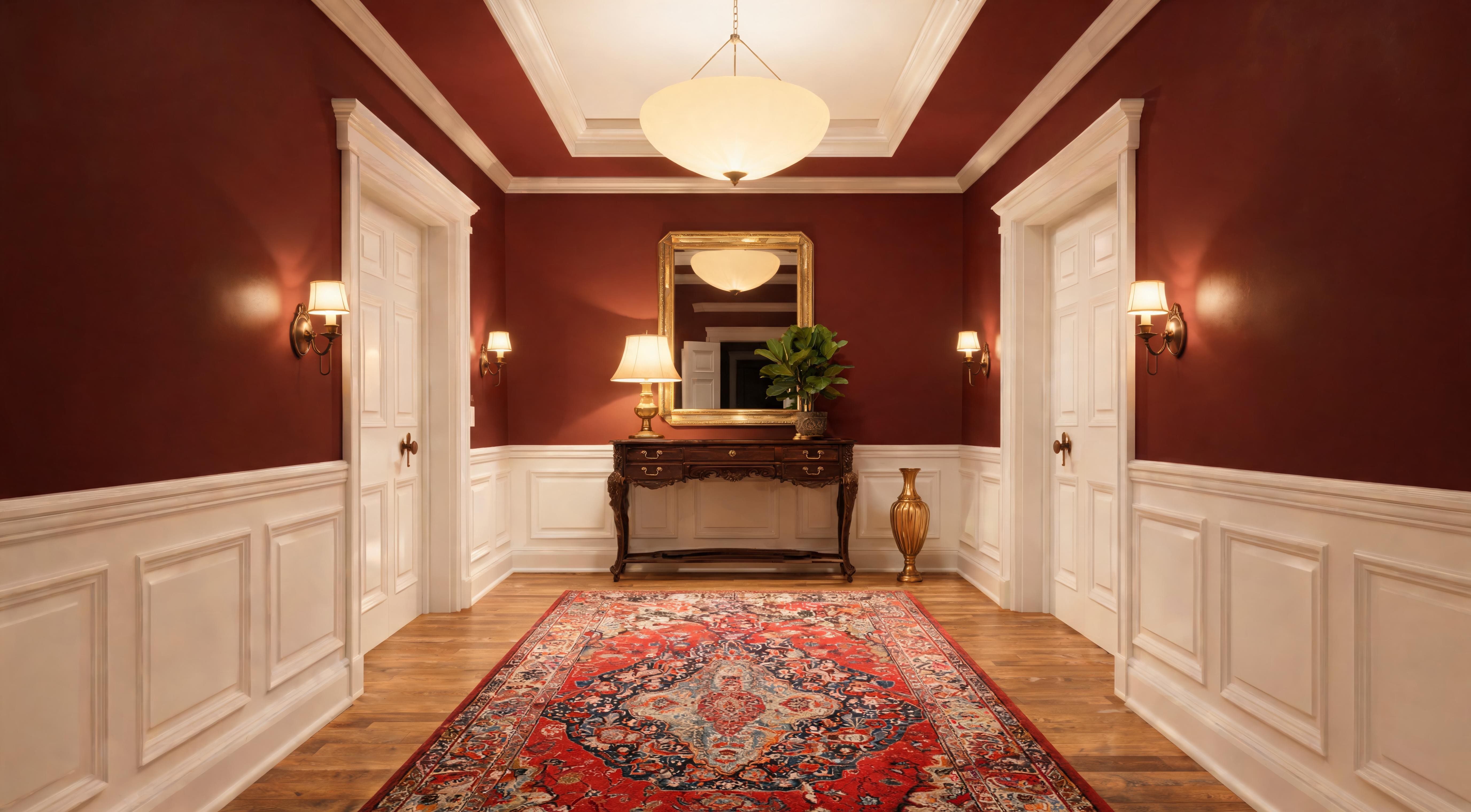
The frame matters more in a hallway than in most rooms because the mirror is the first thing visitors see. A thin black metal frame suits contemporary hallways. A rounded or arched frame in natural wood adds warmth. A frameless mirror reads as modern and makes the glass appear larger. Avoid ornate gold frames unless the rest of the house is decorated in a style that supports them — in a standard UK home they read as hotel lobby rather than considered design.
Lighting
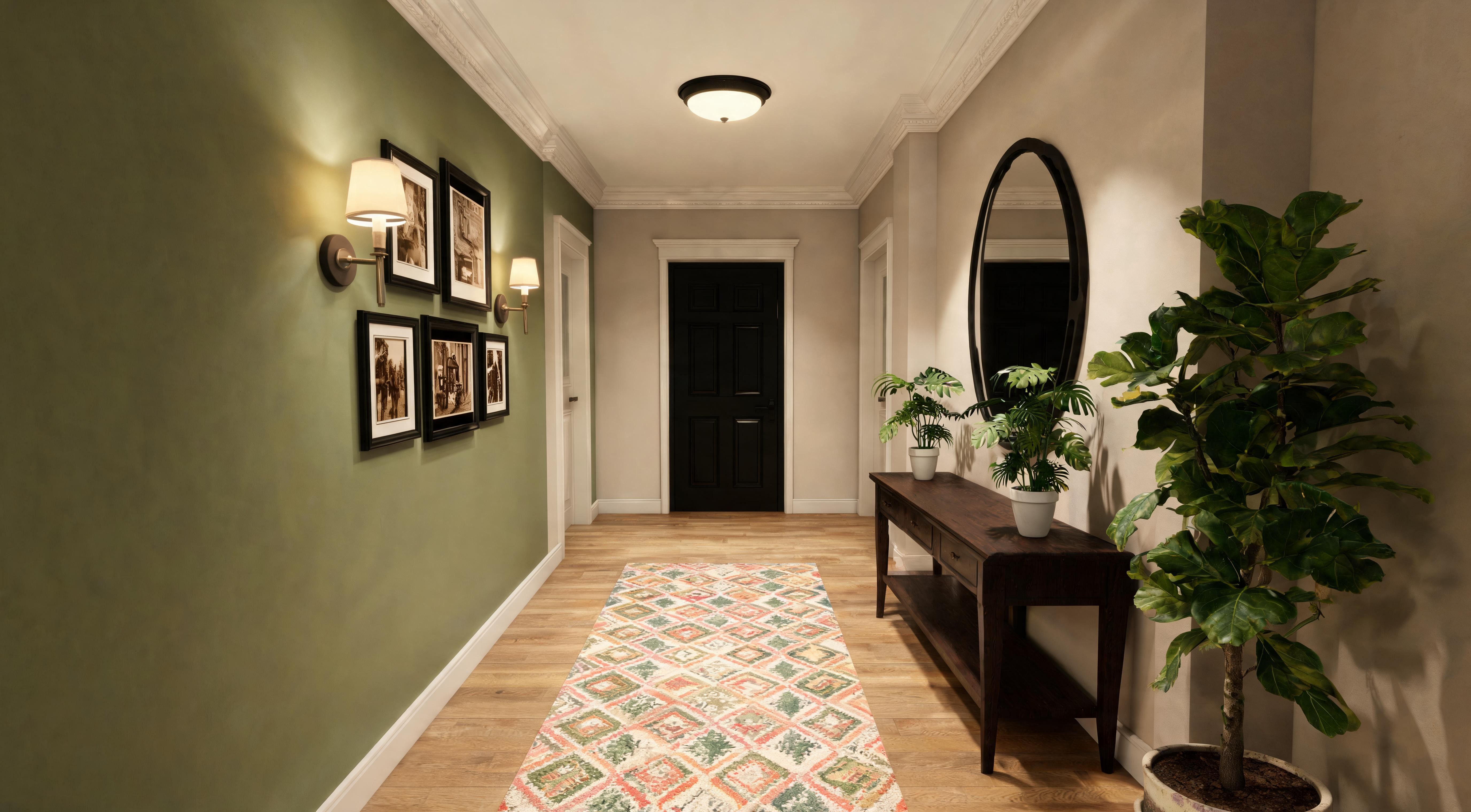
The hallway is the room most likely to have a single bare overhead light and nothing else — which is exactly why it feels like a corridor. The fix is the same principle as every other room in the house: replace the single source with something that creates warmth, shadow and atmosphere.
The total cost of transforming hallway lighting from a single overhead bulb to a three-source setup is between €40 and €155 — and none of it requires an electrician. The result is a hallway that feels warm and considered from the moment the front door opens, which is the entire point.
Watch out for
Downlights in a narrow hallway. Recessed ceiling spots cast hard pools of light directly onto the floor, creating bright-dark stripes that emphasise the corridor effect rather than reducing it. If you already have downlights, fit them with the warmest bulbs possible (2700K) and add a wall light to soften the harshness.
Coat Hooks and Storage
A coat stand in a hallway takes up floor space, tips over when loaded unevenly, and looks messy the moment more than two coats hang from it. A row of wall-mounted hooks is better in every measurable way: it uses no floor space, holds more coats, distributes weight evenly, and — when chosen deliberately — reads as a design element rather than a functional afterthought.
For shoe storage, the space beneath the console table is the first option — a pair of baskets or a low open shelf keeps shoes contained without adding any furniture. If the household has more shoes than the console can accommodate, a slim shoe cabinet with tilt-out compartments is the most space-efficient dedicated solution. The critical rule with shoe storage in a hallway is containment: shoes that are visible should be limited to the pairs currently in use. Everything else goes in a cupboard or a bedroom wardrobe.
The Floor: Runner Rugs and What Goes Underfoot
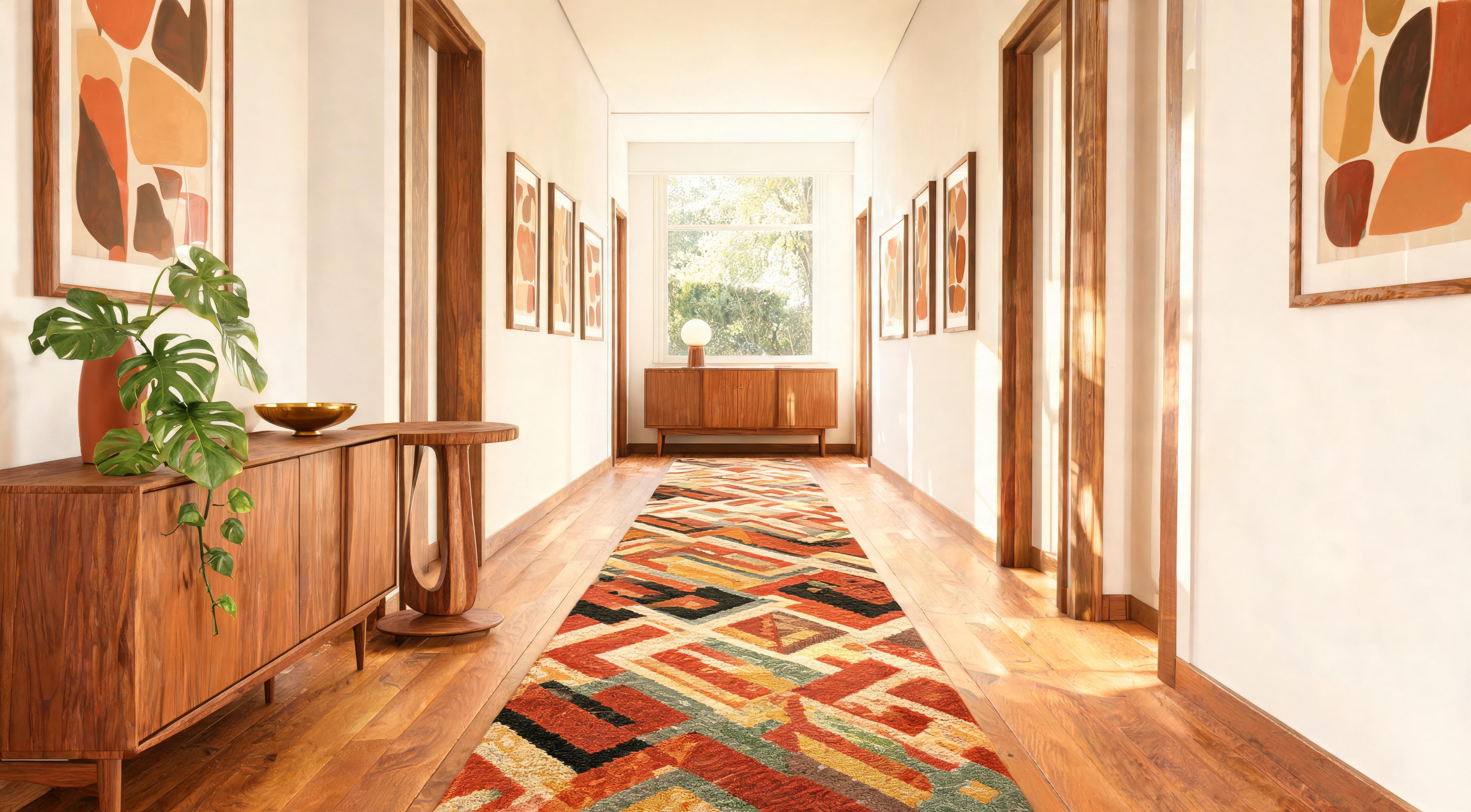
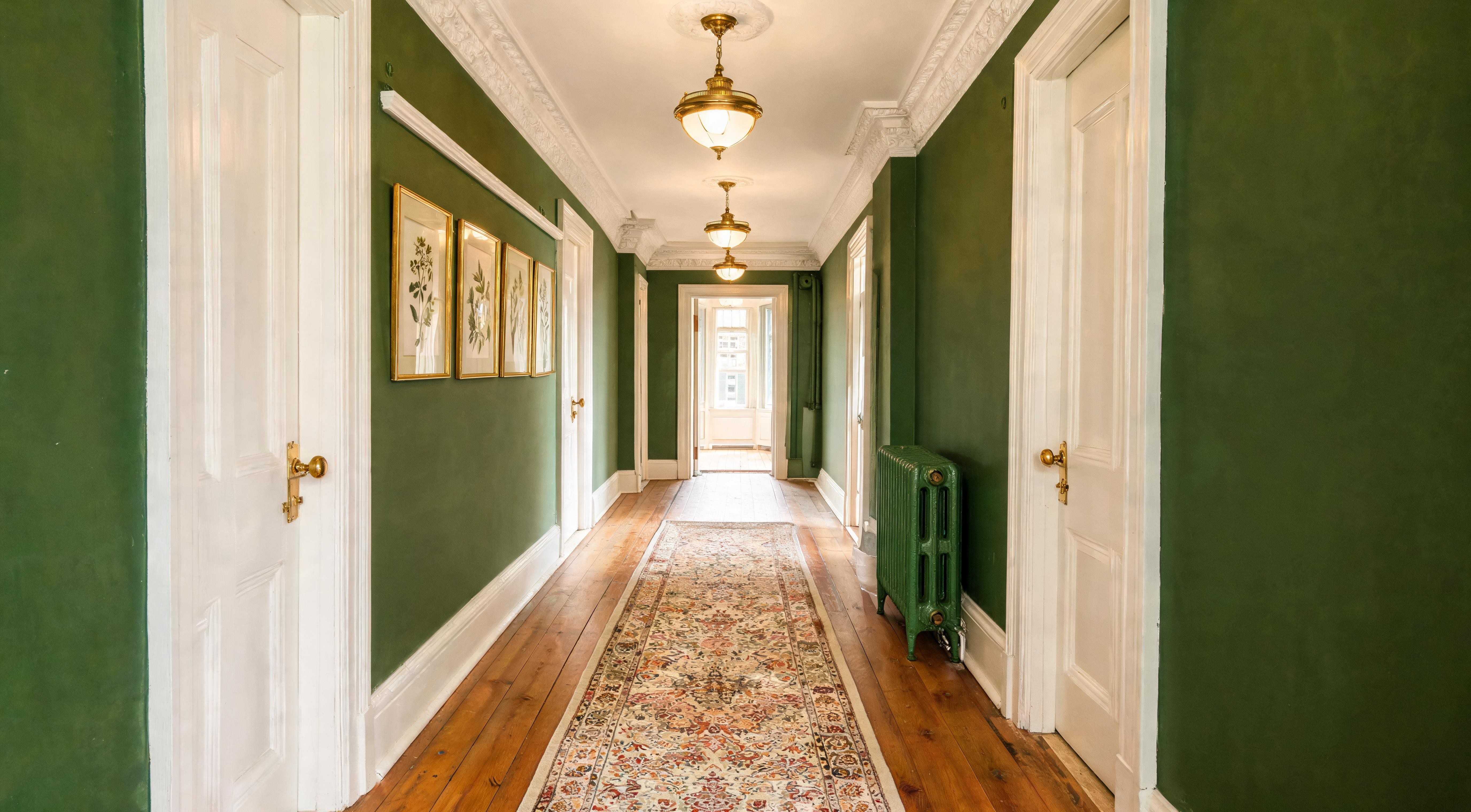
A hallway floor is the hardest-working floor in the house — it takes more foot traffic per square metre than any other room. If the existing floor is in good condition, a runner rug is the most cost-effective way to add warmth, colour and visual length without replacing anything.
The length of the runner matters as much as the width. A runner that stops short of the hallway’s visual end looks like a sample rather than a designed element. Extend it to within 30cm of the far wall or the first door threshold — whichever comes first. A runner that is too short makes the hallway look shorter than it is.
Pile height in a hallway runner should be low — flat-weave, kilim or short-loop. High-pile or shaggy runners collect dirt rapidly, trip on door swings, and mat down within months in a high-traffic zone. A flat-weave with a non-slip underlay beneath it is the most practical combination.
Watch out for
Runners without a non-slip pad underneath. On hard floors — tile, wood, stone — a runner without a grip pad is a genuine safety hazard, particularly at the front door where people step in from outside. A felt or rubber non-slip underlay costs under €10 and prevents the rug from sliding entirely.
The Narrow Hallway Problem
Most UK hallways are narrow — 80 to 100 centimetres is standard in terraced and semi-detached houses. This width does not accommodate a standard console table, a coat stand and a shoe rack side by side. The solution is not to avoid furniture but to think vertically rather than horizontally.
The narrow hallway is also where paint colour makes the most difference. A dark narrow hallway feels oppressive. A hallway painted in a light, warm neutral — not brilliant white, which reads as cold under artificial light, but a warm off-white or very pale stone — feels wider and more welcoming. If you want to use a darker colour, apply it above picture-rail height only and keep the lower walls pale.
The Weekend Hallway Transformation
The order matters because each element relates to the next. The console or shelf goes in first because everything else is positioned relative to it — the mirror above, the lamp on it, the hooks nearby. Do them in this order and the spacing resolves naturally. Do them out of order and you end up moving hooks, re-hanging the mirror, and discovering the lamp does not fit.
The hallway sets the tone for every room behind it. A considered hallway tells visitors — and reminds you every time you come home — that the house is looked after, that the space is designed, that someone cared enough to make the first three seconds feel right. The cost of achieving this is lower than any other room in the house. A console table, a mirror, a warm bulb, a set of hooks and a runner rug: five things, a weekend, and a budget that rarely exceeds €300.