
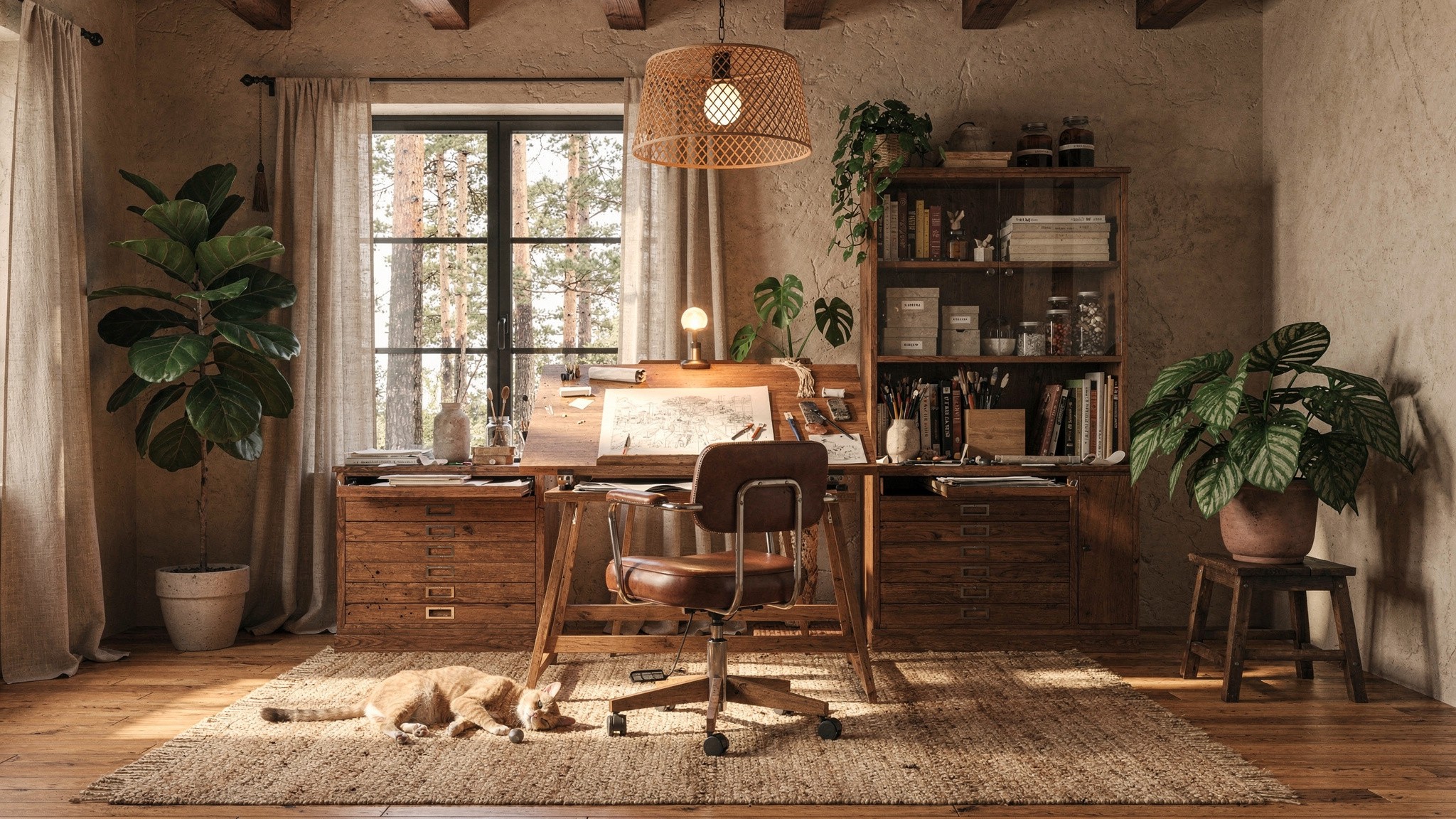
The Hobby Corner: Turning a Spare Space Into Somewhere You Actually Use
Craft tables, game corners, display shelves and plant stations — how to turn one ignored corner of a room into a small, considered space that earns its keep.
Every home has one. A corner by a window that catches good light and holds nothing but a side table. The end of a landing. A section of a spare room that never quite became an office because there was never quite enough to put in it. Most people leave these spaces alone, or worse, let them become the place where things get put down and forgotten — a chair draped with clothes, a box that has not been unpacked since the move. The alternative costs almost nothing and takes an afternoon: decide what the corner is for, then build it in layers until it is unmistakably that thing. A hobby corner is not a smaller version of a room. It is a single, considered answer to the question of where you keep and use the thing you actually enjoy doing.
Choosing What the Corner Is For
Four types of corner cover almost every version of this that works.
The most underused version is the display corner. Most people assume a “collection” needs to be large or valuable to deserve its own space, so records stay in a crate and ceramics stay in a cupboard, doing no visual work for the room at all. An open shelf given over entirely to what you already own — with nothing added and nothing new bought — is usually the fastest of the four to finish, and often the one with the biggest visible effect for the least effort.
The Craft & Maker Corner
A seated craft surface should sit 72 to 76cm high — standard desk height — with the chair seat at roughly 45cm so your forearms rest flat rather than reaching up or down. A standing station, useful for cutting, ironing-based crafts or anything you do in short bursts, works better at 90 to 95cm: close to kitchen worktop height. Get the height wrong in either direction and the corner will quietly stop getting used within a few weeks, long before you consciously notice why.
Lighting is the one place a craft corner breaks the rule that applies almost everywhere else in the house. A reading or relaxing corner wants warm, low light around 2700 Kelvin. A craft surface wants the opposite: a 4000K task lamp with an adjustable arm, positioned to fall over the shoulder of your non-dominant hand so it does not cast your working hand’s shadow across the surface. Cooler, brighter light shows true colour and fine detail in a way warm light cannot — which matters for matching thread, checking paint mixes or reading small print on a pattern.
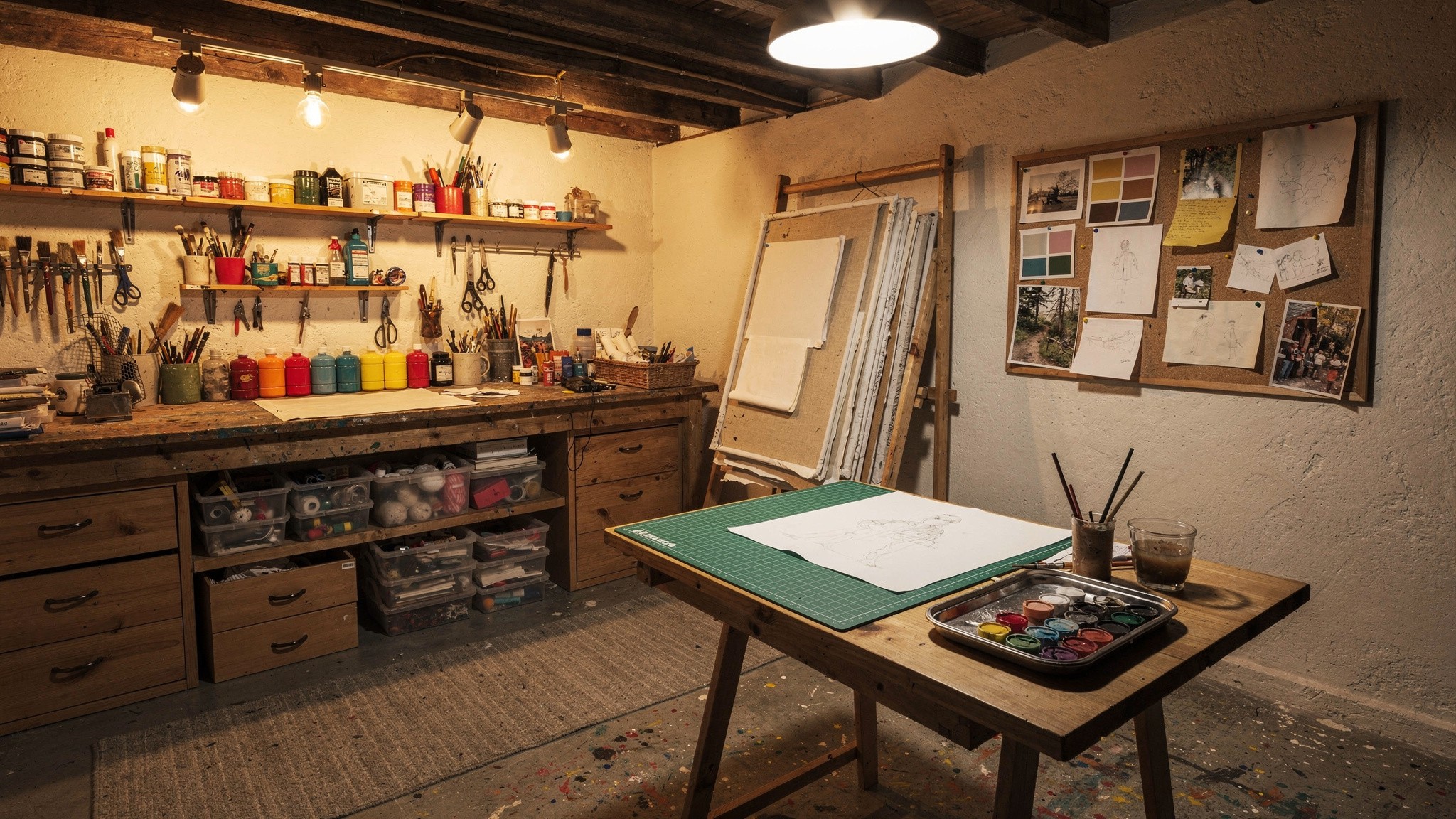
Storage should sit within arm’s reach and close fully — open bins collect dust and visual noise in equal measure. A rolling storage cart (roughly €40 to €70) works well because it tucks under the surface when not in use and rolls out when it is. A cube storage unit in the €70 to €120 range, fitted with a mix of open cubes for frequently used items and closed boxes for the rest, does the same job for a wall-mounted setup.
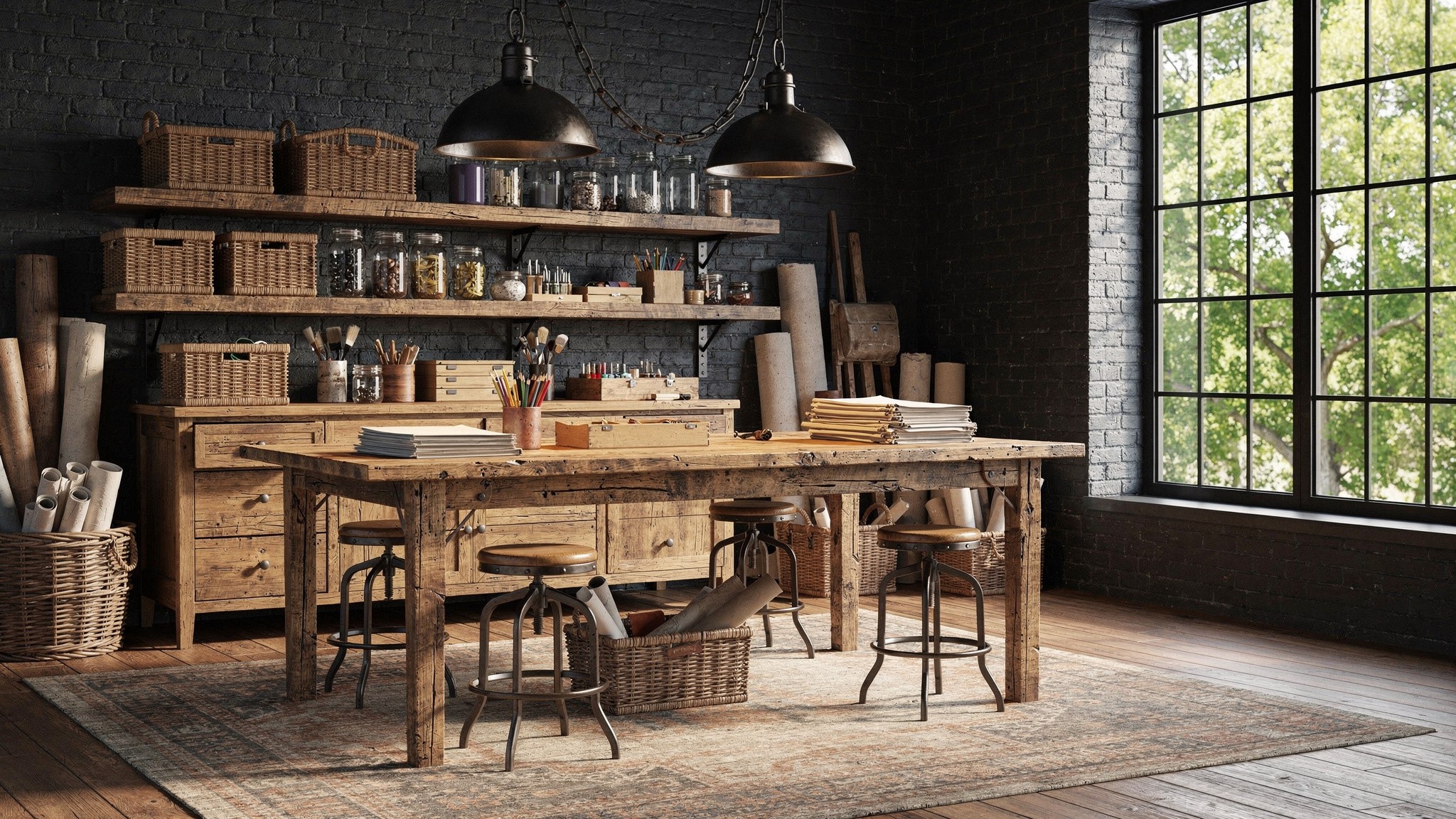
The Game & Puzzle Corner
The appeal of this corner is almost entirely about permission: a small table where a jigsaw or a board game can stay half-finished for three days without being cleared away is doing something a dining table cannot. A surface of at least 60 by 60cm covers a 500 to 1,000-piece puzzle with enough margin to sort pieces at the edges. If the table needs to be reclaimed occasionally, a roll-up felt puzzle mat (around €15 to €25) lets you gather everything mid-puzzle and store it without losing progress.
Light matters here in a way that is easy to miss. Overhead light alone flattens a puzzle’s surface, making it harder to see piece edges and texture. A single lamp angled in from one side — raking light, in photography terms — throws just enough shadow across each piece to make its edges legible. It is a small adjustment that makes sorting noticeably faster.
The Display & Collection Corner
Styling a collection well comes down to two habits stylists use without thinking about them: group in odd numbers, and vary the height. Three ceramic pieces of different heights read as arranged; two of the same height read as a pair that happens to be sitting there. Leave at least one shelf, or one clear section of a shelf, empty — a fully packed display reads as storage, not styling, and the empty space is what lets the eye rest on the pieces that matter.
The backing behind the display does more work than most people give it credit for. Lining the back panel of an open shelving unit with a contrasting paper, a offcut of wallpaper, or a coat of paint two tones darker than the wall gives the objects in front of it a defined edge, the same way a museum vitrine uses a dark backdrop to make each object read clearly. It is a small, cheap addition — often under €20 for enough paper to line a standard shelf unit — with a disproportionate effect on how considered the whole thing looks.
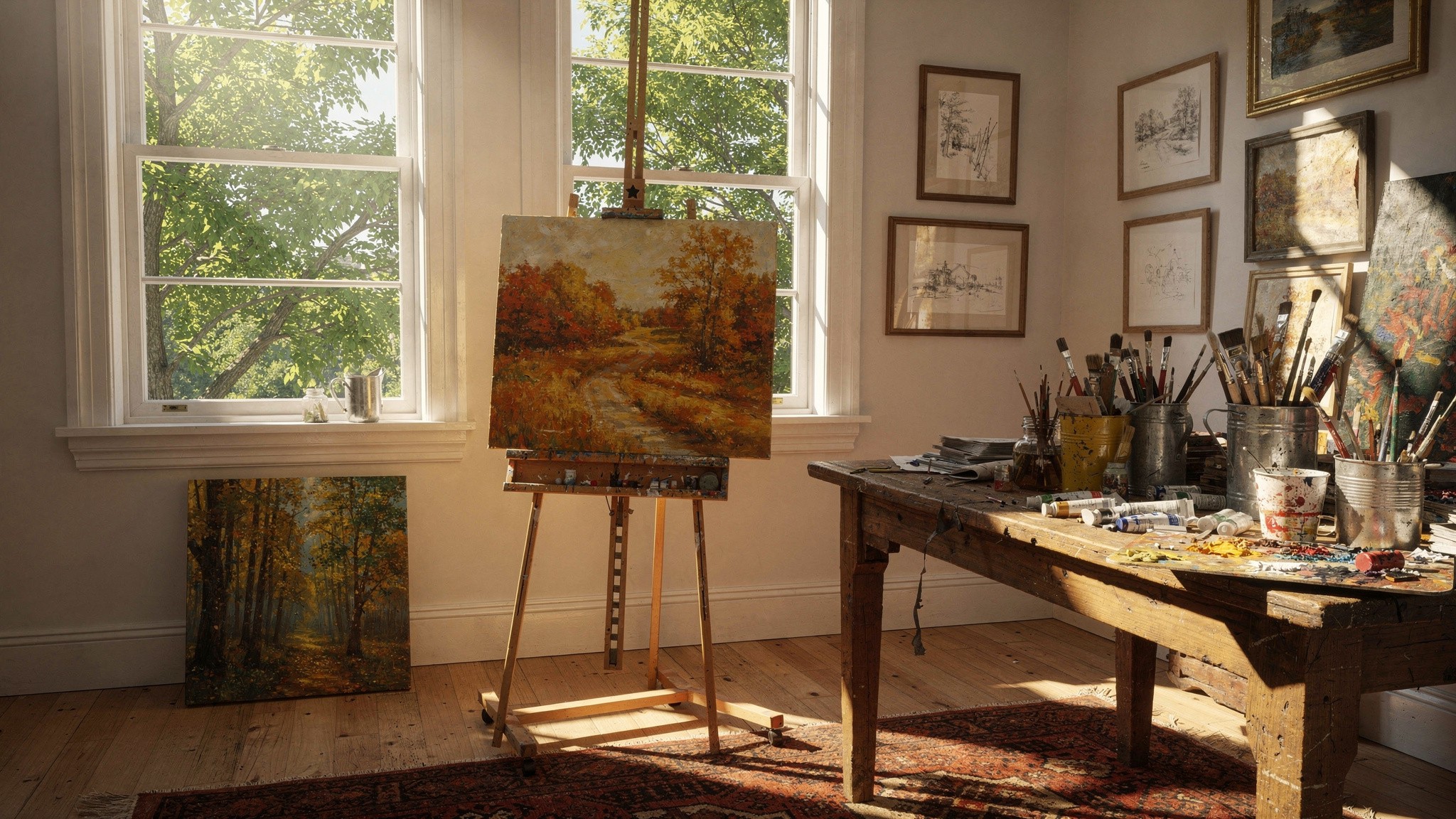
The Plant & Propagation Station
A propagation station is the smallest and cheapest of the four corners to set up, and the one most likely to actually improve over time rather than stay static. Group jars and cuttings on a single shelf or small stand near an east- or north-facing window — bright but not scorching. Grouping matters here for a practical reason as well as a visual one: cuttings propagate faster with the local humidity a cluster of jars creates around itself than they do spaced individually around a room.
Treat the water change as a small ritual rather than a chore. Doing it on the same day each week, and using that moment to check for new roots, is the difference between a station that gets tended and one that quietly turns into a shelf of murky jars within a month.
Building the Corner in Five Layers
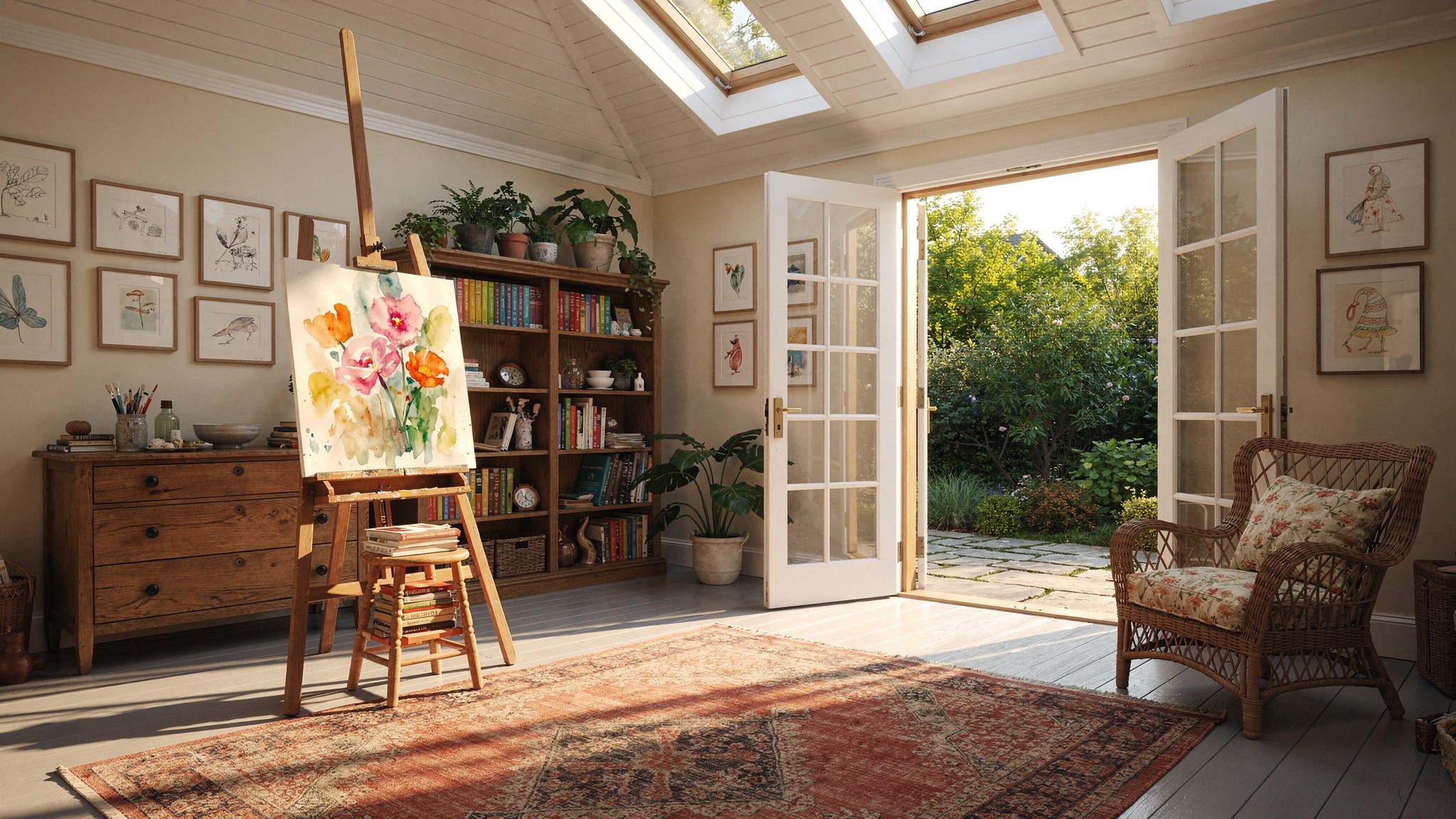
A hobby corner does not need a spare room or a proper studio to justify itself. It needs one corner, a surface at the right height, light that suits the task rather than the room, and a boundary that keeps it contained. Choose the version — craft, game, display or plant — that matches what you actually do on a quiet afternoon, build it in layers, and the rest of the room stops having to apologise for the corner it used to ignore.