
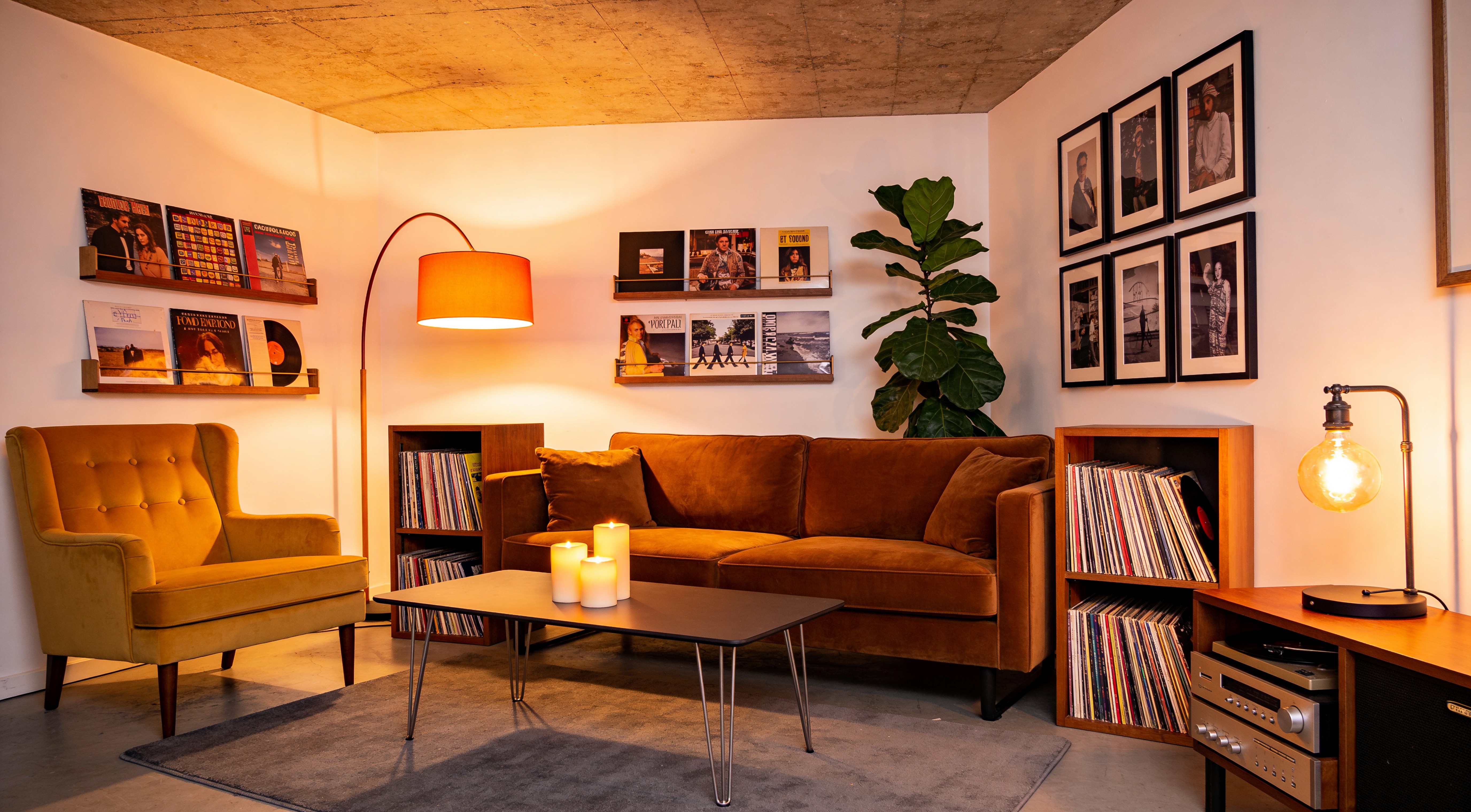
How to Light a Living Room Properly — The 3 Layers Every Home Needs
Why one ceiling light makes a room look flat, and how layering ambient, task and accent light changes everything. A practical guide with real examples and honest costs.
Almost every living room lighting problem has the same cause: a single overhead light doing all the work. One ceiling fixture floods the room with flat, even light that eliminates shadow, flattens texture, and makes the space look like a waiting room — regardless of how good the furniture is.
The solution is not expensive. It does not require rewiring or an electrician. It requires understanding one simple principle — layered lighting — and applying it with three different types of light source.
Why one ceiling light is always wrong
This is not about taste or style. It is about how human vision perceives space.
Natural light never comes from directly above. During the day, light enters a room at an angle — through windows, bouncing off walls and surfaces, creating shadow and highlight that gives objects their three-dimensional appearance. A single overhead light does the opposite: it eliminates the side light that creates shadow and depth, flattening everything beneath it.
The other issue is color temperature. Most ceiling fixtures use bulbs in the 4000–6500 Kelvin range — cool white to daylight. This is correct for a workspace or bathroom. In a living room, it creates a clinical atmosphere that no amount of soft furnishings can fully overcome.
01 — Ambient light
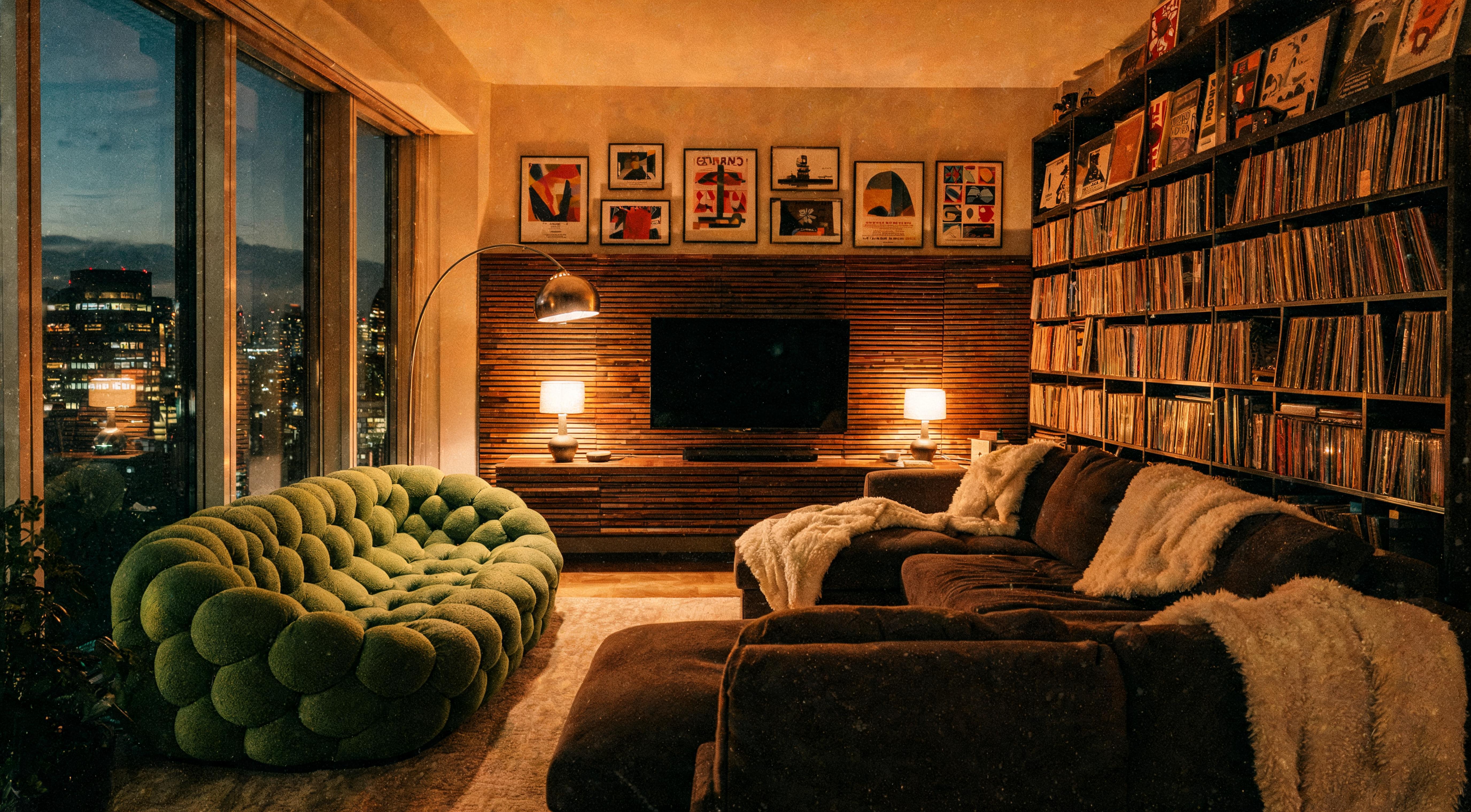
Ambient light is the base layer — general, diffused illumination that fills the room without creating strong shadows or focal points. It should be warm (2700–3000 K maximum), low in intensity in the evening, and ideally dimmable.
The ceiling fixture typically provides this layer, but should never be the only contribution to it. Additional ambient sources that work well:
- A large floor lamp with an upward-facing shade that bounces light off the ceiling
- LED strip lighting run along the top of a bookcase or behind the television
- Wall-mounted sconces placed at seated eye level
The test: ambient light in the evening should be comfortable to sit in without any additional sources, but not bright enough to read easily. If you can read under it alone, it is too bright.
Cost beyond the existing ceiling light: a large floor lamp with a fabric shade costs between €40 and €100. LED strip lighting behind a television costs €13–€38. Both are plug-in, no electrician needed.
02 — Task light
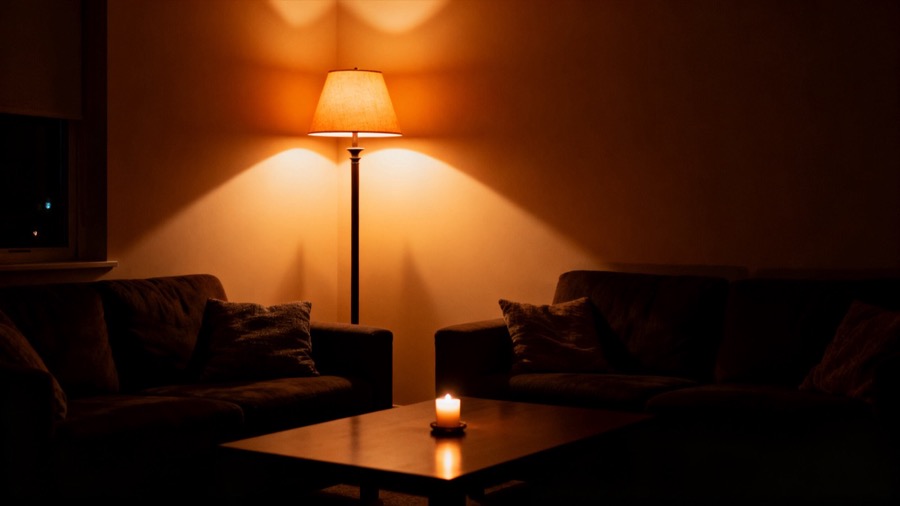
Task light is the functional layer — direct, focused illumination placed specifically where you need to see clearly. In a living room, this primarily means the reading area.
The positioning matters more than the product. A floor lamp placed beside and slightly behind the shoulder of the person reading is significantly more effective than one placed directly in front, which creates glare. The light source should be at approximately seated shoulder height, directed at the surface being used, with the shade preventing direct visibility of the bulb from seated eye level.
For a living room reading setup, an arc floor lamp with a downward-facing shade is the most versatile option — it can reach over the back of a sofa or armchair without the lamp base needing to be placed directly beside the seat.
Cost: a decent arc floor lamp runs between €50 and €140. A fabric-shaded table lamp beside the sofa is the classic alternative — for reading, fabric diffuses light more comfortably than metal or ceramic for extended periods.
03 — Accent light

Accent light is purely aesthetic — the layer most people omit entirely. Its purpose is to create pools of light and shadow on walls, surfaces and objects, giving the room visual depth and warmth that neither ambient nor task light can provide alone.
A painting lit from above, a plant with an uplighter beneath it casting a shadow on the wall, a small table lamp on a bookshelf between books — these are all accent light. The key principle is contrast: accent light works because it is brighter than the ambient level in its immediate area. If the ambient light is too bright, accent light loses its effect.
Specific options that work without spending much:
- Small spotlight above artwork: €13–€30
- Plant uplighter inside a large floor plant: €8–€20
- Decorative table lamp on a bookshelf or console: €20–€63
- Candles in hurricane lanterns on the coffee table — the highest visual reward per euro of any light source
The one number that matters most: Kelvin
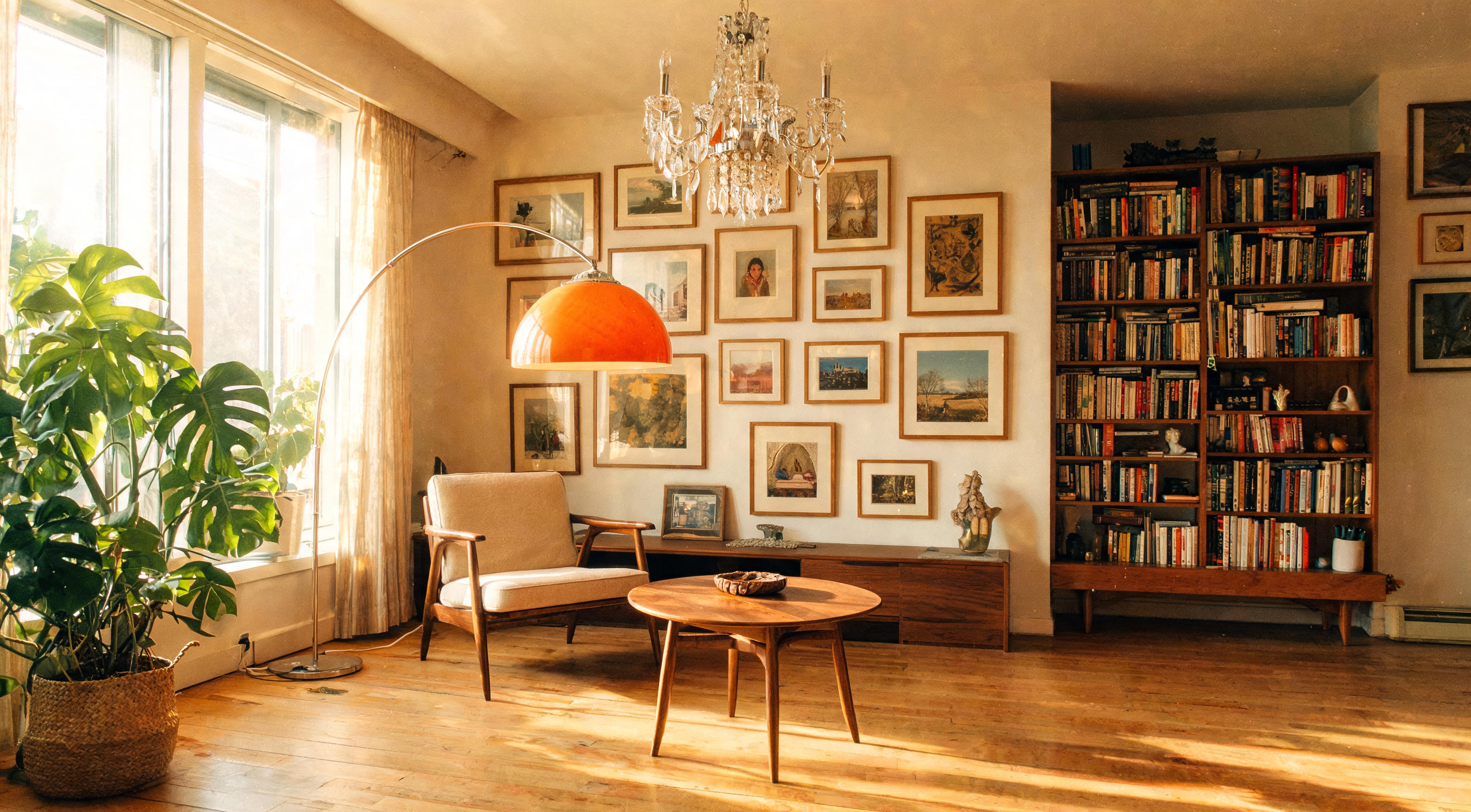
Every bulb has a color temperature measured in Kelvin. This single number determines whether your room feels warm or cold — and it is the most important specification when buying any light source for a living room.
The practical rule: every bulb in your living room should be 2700 K — every single one, in every lamp, from every brand. Mixing color temperatures in the same room is immediately visible and always looks wrong.
Putting it together: a realistic budget
An average living room starting from a single ceiling pendant:
In the evening: dim the ceiling to around 30%, turn on the floor lamp and accent sources. Use the ceiling light at full brightness only when entering the room, cleaning, or looking for something.
Lighting is the single most cost-effective improvement you can make to a living room. Replacing the furniture changes what you sit on. Repainting the walls changes the backdrop. Changing the lighting changes how the entire room feels — the texture of the surfaces, the warmth of the colors, the sense of depth and dimension. None of the changes described here require tools, a ladder, or an electrician. They require an understanding of three layers, a commitment to 2700 K, and the willingness to dim the ceiling light in the evening.