
Which Indoor Plant Goes in Which Room — A Guide by Light
Fiddle leaf fig, monstera, snake plant, pothos and more matched to the right room by light level and humidity. Stop killing plants by putting them in the wrong spot.
Most indoor plants die not from neglect but from being placed in the wrong room. A fiddle leaf fig in a dark hallway, a cactus in a north-facing bathroom, a monstera squeezed into a corner with no light — these are not care failures, they are placement failures. Every plant has a light requirement that is non-negotiable, and matching that requirement to the actual light conditions in each room is the single most important decision you will make as a plant owner. This guide matches the most popular indoor plants to the rooms where they will genuinely thrive.
How to read the light in your home
Before choosing any plant, you need to understand the actual light conditions in each room — not what you think they are, but what they are.
A simple test: hold your hand about thirty centimetres above a white piece of paper in the spot where you want to place a plant. A sharp, clear shadow means bright light. A soft blurry shadow means medium light. No visible shadow at all means low light, and your plant options are genuinely limited.
The living room
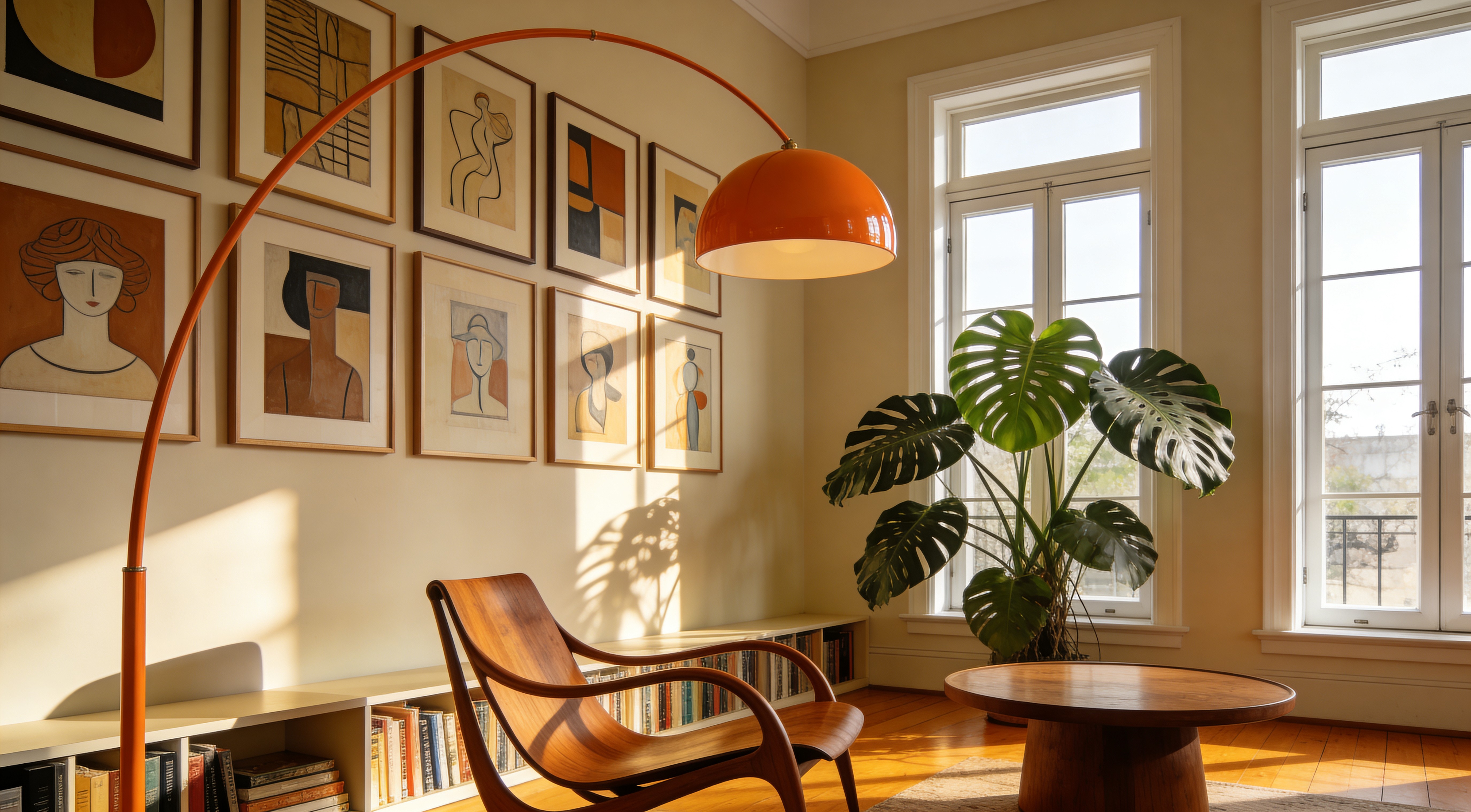
The living room is typically the largest and best-lit room in the home, making it the ideal environment for large statement plants that need consistent bright indirect light.
The fiddle leaf fig is the most photographed indoor plant of the last decade, and for good reason — a well-grown specimen with its large, architectural leaves changes the scale and feeling of a room entirely. It needs a bright spot with indirect light, away from cold draughts and heating vents, and — crucially — it hates being moved. Find the right spot and leave it there. Fiddle leaf figs drop leaves dramatically in response to changes in position, temperature, or inconsistent watering. Water when the top two centimetres of soil are dry, allow excess water to drain completely, and never let it sit in standing water. In the right conditions it will grow up to thirty centimetres per year.
Best position: 1–2 metres from a south or west-facing window.
The monstera is more forgiving than the fiddle leaf fig and more adaptable to varying light conditions, which is why it appears in so many homes. The iconic split leaves develop fully only in good light — in lower light the new leaves emerge without splits, which defeats much of the visual appeal. Monstera grows quickly in good conditions and can become genuinely large; a well-established plant in a bright living room will eventually need a moss pole for support and will fill a corner impressively. Water when the top half of the soil is dry.
Best position: 1–3 metres from any window, tolerates east-facing light well.
The bird of paradise is one of the most dramatic large-format indoor plants available. Strelitzia nicolai — the giant white bird of paradise — can reach ceiling height indoors over several years and has enormous paddle-shaped leaves that move gently in air currents. It needs more light than most indoor plants and will not perform well in anything below medium-bright conditions. Water regularly in summer, reduce significantly in winter.
Best position: beside a south or west-facing window.
The rubber plant is one of the more underrated large indoor plants — it grows steadily, tolerates slightly lower light than the fiddle leaf fig, and the dark burgundy varieties (‘Burgundy’, ‘Abidjan’) have a richness that suits darker, more maximalist interior schemes. Significantly less dramatic in its care requirements than the fiddle leaf fig, making it a better choice for people who want the visual impact of a large plant without the high maintenance.
Best position: beside or slightly back from an east or west-facing window.
The bedroom
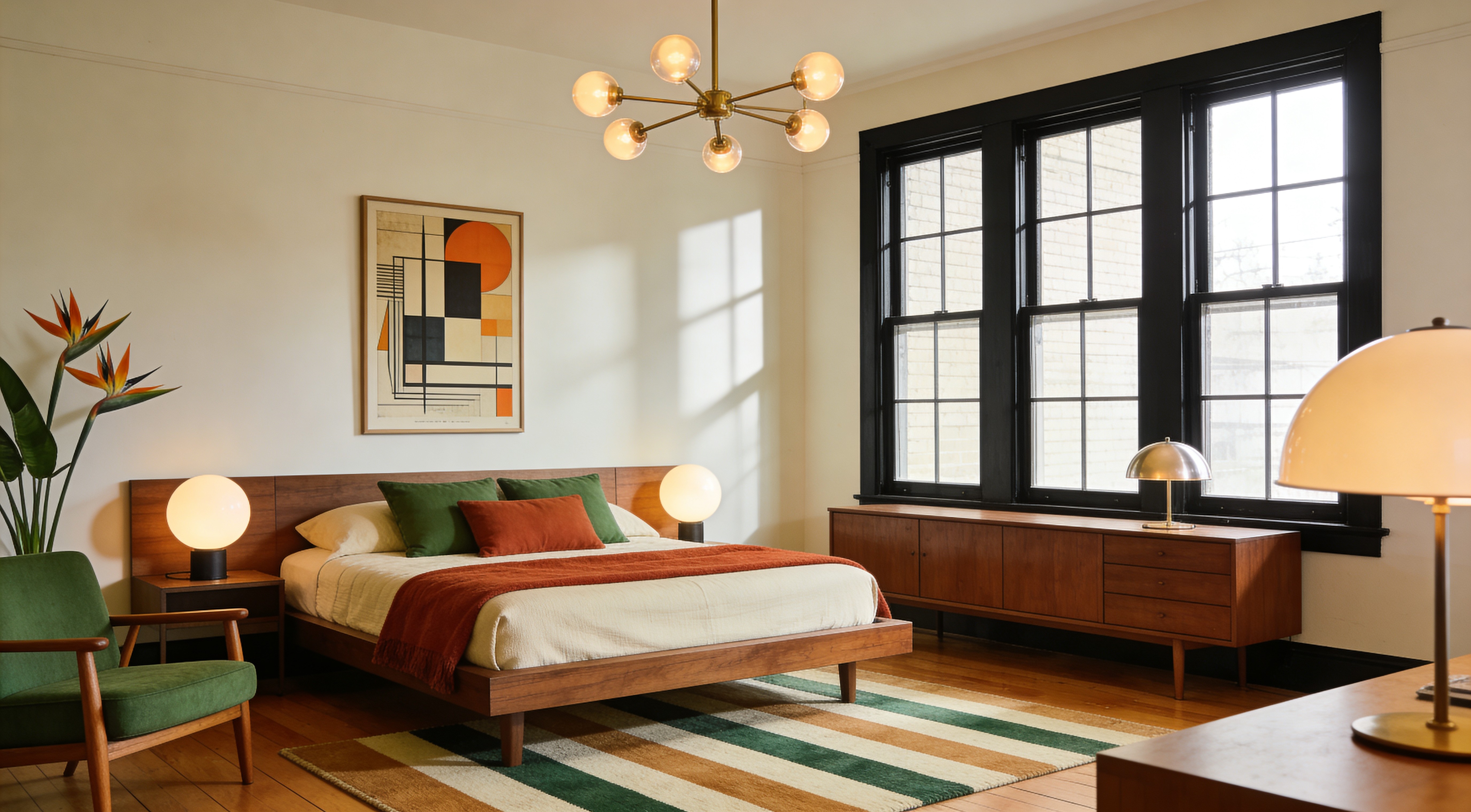
The bedroom is often less well-lit than the living room but suits plants that prefer consistent temperatures, moderate humidity, and medium light. The concern about plants producing CO₂ at night is real but negligible — the amount produced by houseplants poses no health risk.
The snake plant is the most reliable indoor plant for difficult conditions. It tolerates low light, irregular watering, dry air, and neglect with equanimity. The upright architectural form of the taller varieties — ‘Laurentii’ and ‘Black Gold’ — suits bedrooms well, where floor space is often limited and a vertical rather than spreading plant works better. Snake plants are slow-growing, which is an advantage in a bedroom where you do not want a plant that quickly outgrows its space.
Best position: any position in the bedroom, including corners away from windows.
One of very few flowering plants that performs well in low to medium light, which makes it genuinely useful in bedrooms with limited natural light. The white flowers appear periodically throughout the year and the deep green foliage stays glossy with minimal care. Peace lilies are sensitive to overwatering — the most common cause of failure is watering on a schedule rather than reading the plant. Water when the leaves begin to droop very slightly.
Best position: beside a north-facing window or set back from any window.
Pothos is arguably the most forgiving indoor plant available. It tolerates low light, irregular watering, dry air, and almost every form of neglect. In a bedroom it works particularly well as a trailing plant on a high shelf or wardrobe, where the long vines can hang down naturally. The golden and marble queen varieties show their variegation better in good light; the solid green varieties tolerate lower light more successfully.
Best position: shelf, wardrobe top, or hanging planter in any position.
Calatheas have perhaps the most visually complex leaf patterns of any indoor plant — the geometric markings are extraordinary up close and the plants fold their leaves upward at night, giving them the common name prayer plants. They prefer medium indirect light, consistent moisture, and high humidity. A bedroom is often a good match, particularly if you use a humidifier. Not the most forgiving for beginners, but the visual reward in the right conditions is exceptional.
Best position: back from a window, away from heating vents.
The bathroom
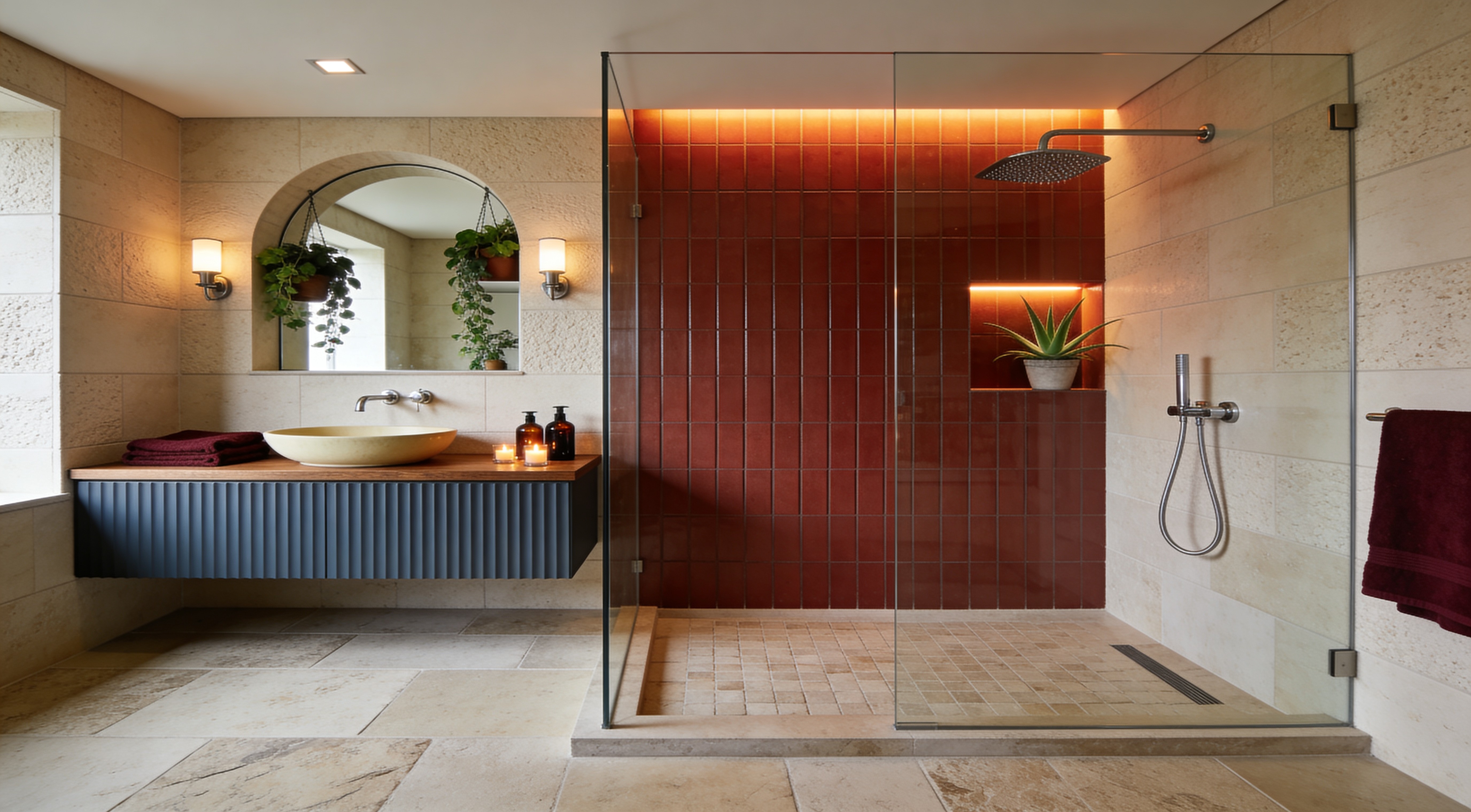
The bathroom is often treated as a difficult plant environment, but for the right plants it is actually ideal — the humidity that condensation from showers creates suits tropical plants naturally.
Boston ferns need more humidity than almost any other commonly kept houseplant, which makes a shower bathroom the best room in the house for them. In dry centrally heated rooms they brown at the tips and shed constantly. In a humid bathroom with good indirect light they are lush, full, and grow quickly. A large boston fern on a high bathroom shelf or hanging from the ceiling beside a skylight is one of the most effective plant displays possible.
Best position: beside or under a bathroom window, or hanging where it receives filtered light.
Spider plants tolerate almost everything — low light, irregular watering, temperature fluctuation — and produce cascading offshoots that look particularly effective when the plant is hung or placed on a high shelf. They suit bathrooms well because they are unbothered by humidity or the temperature swings from showers.
Best position: hanging planter, windowsill, or high shelf.
Aloe vera is the exception to the bathroom plant rule — it needs bright light and dry soil, making it suited to bathrooms with good natural light rather than dark bathrooms. The gel inside the leaves has genuine healing properties for minor burns and skin irritation, making it a practical as well as decorative choice.
Best position: on or beside a bright bathroom windowsill only.
The ZZ plant stores water in its thick rhizomes and tolerates extended periods without watering, very low light, and dry air. It grows slowly and cleanly, with glossy dark green leaves that look architectural rather than fussy. In a low-light bathroom it will survive; given medium light it will grow steadily and look excellent.
Best position: any position in the bathroom.
The kitchen
Kitchens are often overlooked as plant environments, but a south or east-facing kitchen windowsill is one of the best spots in the house for light-loving plants. The kitchen also has the advantage of being a room you spend significant time in, which means you will notice and respond to plant care needs more quickly.
Growing herbs on a kitchen windowsill is one of the most satisfying and practical plant choices possible. Basil needs warmth, bright light and consistent moisture. Rosemary and thyme need a bright windowsill and less frequent watering. Mint is the most tolerant of the group and will spread vigorously if given the opportunity — keep it contained to its own pot.
Best position: south or east-facing windowsill.
A trailing pothos on top of kitchen cabinets, allowed to hang down the front, is one of the easiest and most effective ways to bring green into a kitchen. It requires almost no maintenance and looks increasingly impressive as the vines grow longer over time.
Best position: top of cabinets or a high shelf.
The Pilea is compact, architecturally interesting, and thrives on a bright kitchen windowsill. The round coin-shaped leaves on upright stems give it a distinctive appearance unlike most other houseplants. It grows quickly in good light and regularly produces offsets — small plantlets at the base — that can be separated and potted up.
Best position: beside a bright kitchen window, not in direct sun.
The hallway
The hallway presents the most challenging plant environment in most homes — typically low light, temperature fluctuation from door openings, and limited floor space. Plant choices here are genuinely limited to the most tolerant varieties.
The cast iron plant earned its name honestly. It tolerates near-darkness, temperature extremes, dust, neglect, and irregular watering without complaint. It grows very slowly, but in a hallway where growth would quickly become a problem, slow growth is an advantage. The deep green strappy leaves have a quiet elegance that suits hallways — it does not draw attention to itself but looks composed and intentional.
Best position: any position in a hallway, including spots with no window nearby.
As in the bedroom, the snake plant’s tolerance for low light makes it one of the few plants that can succeed in a dim hallway. The upright form is also practical in a narrow hallway where a spreading plant would become an obstacle.
Best position: floor-standing in any position.
The ZZ plant tolerates genuinely low light conditions better than almost any other decorative houseplant. Its glossy leaves catch whatever light is available, which gives it a presence in dark spaces that matte-leaved plants lack.
Best position: console table or floor position in a hallway.
The most common plant mistake is choosing a plant for how it looks in a photograph and then placing it wherever seems convenient. Light is not a preference for indoor plants — it is a biological requirement, and no amount of care compensates for the wrong light level. Match the plant to the room, give it the right pot size and a well-draining soil mix, water when the soil tells you to rather than on a schedule, and you will find that most indoor plants are significantly less demanding than their reputation suggests. The ones that die are almost always in the wrong place, not in the wrong hands.