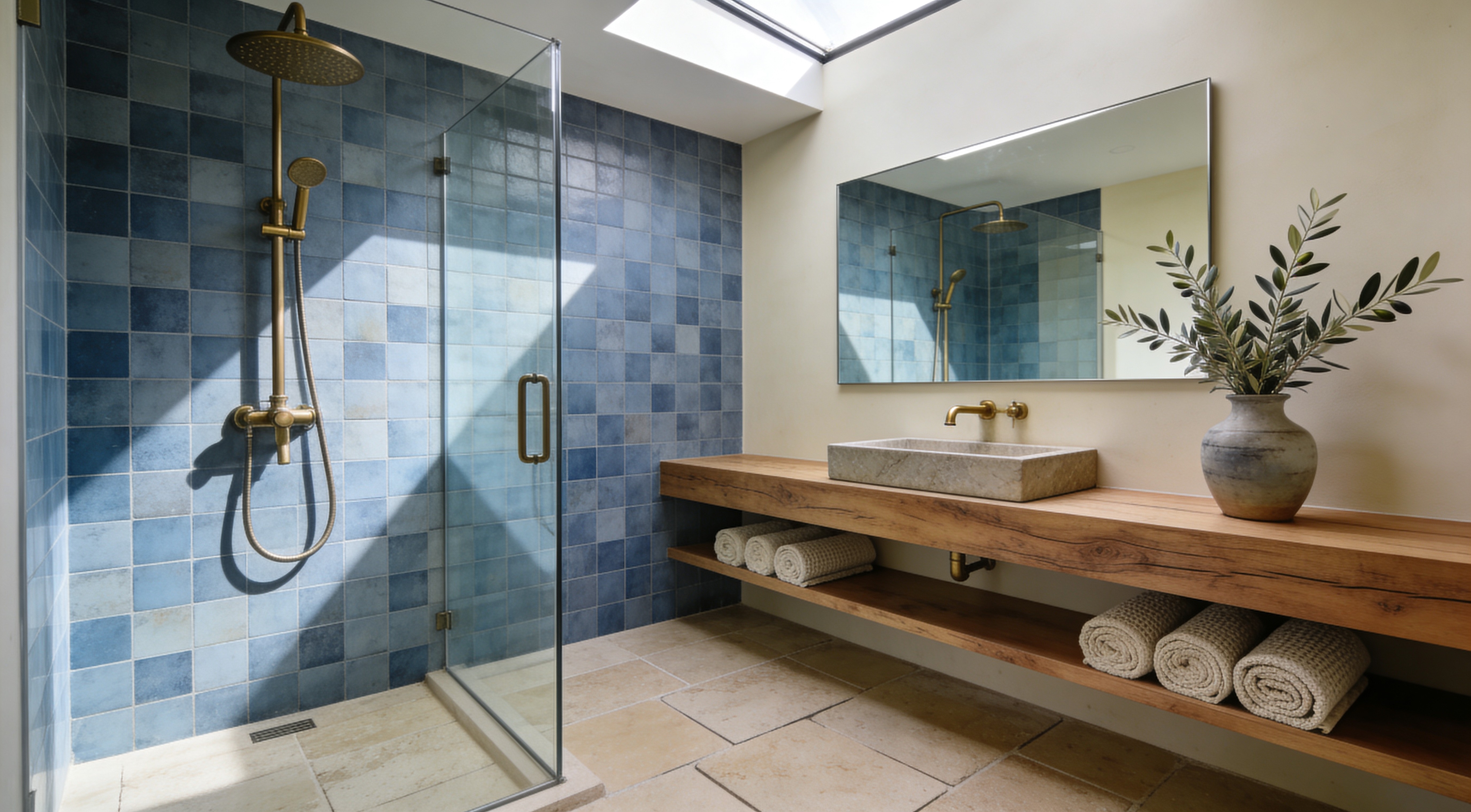
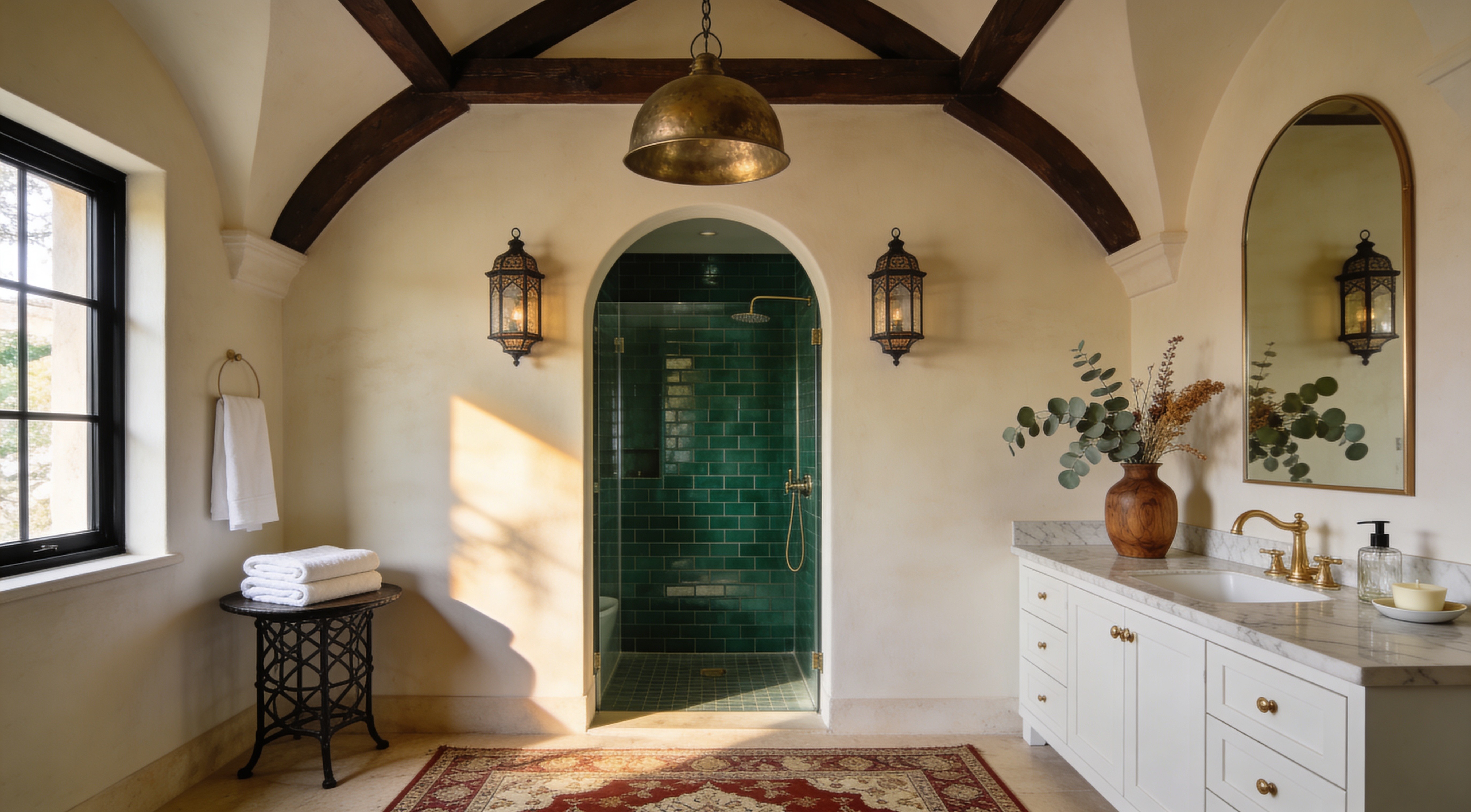
Your bathroom with zellige tiles catching light on an uneven hand-glazed surface Save

Zellige Shower Tiles: How to Choose, Use and Live With Them

Zellige tiles are handmade, imperfect and completely obsession-worthy. Here is how to pick the right colour, grout it correctly and avoid the three mistakes most bathrooms make.

Zellige is one of those materials that photographs well and delivers in person. The tiles are made by hand in Morocco — glazed terracotta, pressed into shape, fired, then cut — and the variation between each tile is the point. No two are exactly the same colour. No two are exactly the same size. The surface is deliberately uneven, and that unevenness catches light differently depending on the time of day, the angle of the sun, the steam in the room.

In a shower, this matters. Water moving across a flat subway tile disappears. Water moving across zellige catches and refracts. The surface reads differently at 7am than it does at noon. That is not an accident — it is what the material does, and why it justifies the cost.
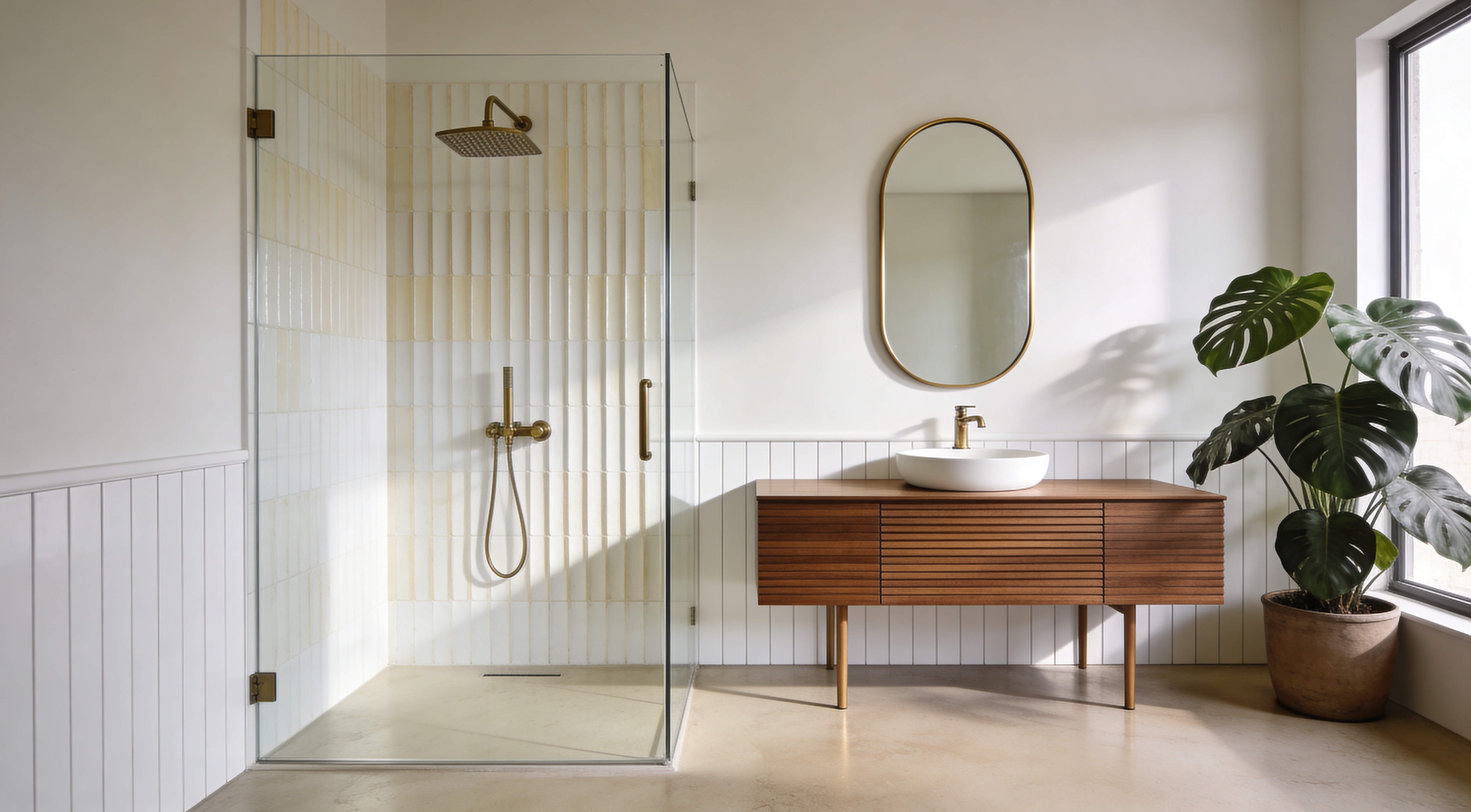
Your zellige tiles up close — an uneven surface of hand-pressed glaze catching the light


Before the colour: what you need to know about water

Zellige is not waterproof by default. The terracotta body is porous, and without preparation it will absorb water, produce efflorescence (white salt deposits blooming on the surface) and eventually break down.

The fix is straightforward: seal the tiles before grouting, use a flexible waterproof grout in the joints, then seal the entire surface again after. In a shower enclosure, this is not optional. In a bath surround where water contact is incidental, the stakes are lower, but the process is the same.

Done correctly, zellige performs perfectly in wet areas. The failure cases you see online — tiles lifting, grout crumbling, staining — are almost always installation errors, not material failures.

Worth knowing Not every tiler has worked with zellige. Because the tiles vary in size and thickness, standard installation assumptions do not apply. Ask specifically whether your tiler has installed handmade Moroccan tile before — the levelling, adhesive depth and grouting approach all differ from standard ceramic work.

The four colours

The colour range for zellige is wide, but four have become the standard references for bathroom design. Each has a different character in a wet space.

Forest Green
The most popular choice by some distance. In a shower, the glaze shifts between olive, emerald and hunter depending on the light. Reads moody in the morning, more alive in full sun.
Pairs with: unlacquered brass, raw plaster walls, natural stone floor
Ink Blue
A deeper, harder blue than the photos suggest. In a small shower it creates enclosure — intimate rather than confined. Works best with strong natural light or very deliberate artificial lighting.
Pairs with: chrome or gunmetal fixtures, white grout, limestone or white marble floor
Terracotta
The warmest option and the most forgiving. Terracotta zellige hides watermarks better than green or blue, and the earthy tones age well. The surface variation reads as texture rather than inconsistency.
Pairs with: matte black or bronze fixtures, sand-toned grout, concrete or travertine
Blanc / Warm White
The subtlest version — all texture, almost no colour. The glaze variation is visible in raking light but the room reads as white. Good for smaller spaces where a saturated colour would overwhelm.
Pairs with: any metal finish, warm or cool grout, works in almost any bathroom

What it costs

Your shower alcove with zellige tiles installed floor to ceiling — brass rainfall head, stone soap dish

Zellige pricing varies considerably depending on origin, finish quality and where you source. Prices below are per square metre, supply only.

Entry
£30–55/m²
Machine-assisted zellige from Spain or Portugal. Consistent sizing makes installation easier. Glaze variation is present but less pronounced — readable as zellige, but not the full irregularity of the real thing.
Mid
£55–95/m²
Genuine handmade Moroccan zellige from established UK importers. Full glaze variation, authentic sizing irregularity, the actual material. This is where most renovations land.
Premium
£95–150+/m²
Curated imports with colour-graded batches, or bespoke colourways. For projects where tile-to-tile colour consistency matters or a specific shade falls outside the standard range.

Add 10–15% to your tile quantity for cuts and waste. A standard shower enclosure of 3–4m² will need 3.5–4.5m² of tile ordered. Installation costs for zellige run 20–30% higher than standard ceramic work, owing to the additional setting out, levelling and sealing stages involved.


Grout: the decision most people get wrong

The grout colour determines the final reading of the wall as much as the tile colour. With zellige, because the joints are irregular in width, the grout is not a fine line — it is a visible, constant element of the surface.

Green + Off-white
Classic, clean. Contrast shows tile variation clearly.
Green + Sage
Tonal. The wall reads as one immersive surface.
Blue + White
High contrast. Traditional and strong — emphasises the grid.
Terracotta + Sand
Warm and quiet. The most liveable, most forgiving option.

The general rule: if you want tile variation and pattern to read clearly, choose a contrasting grout. If you want the wall to feel like a single monolithic surface, choose a tonal grout in the same colour family as the tile.
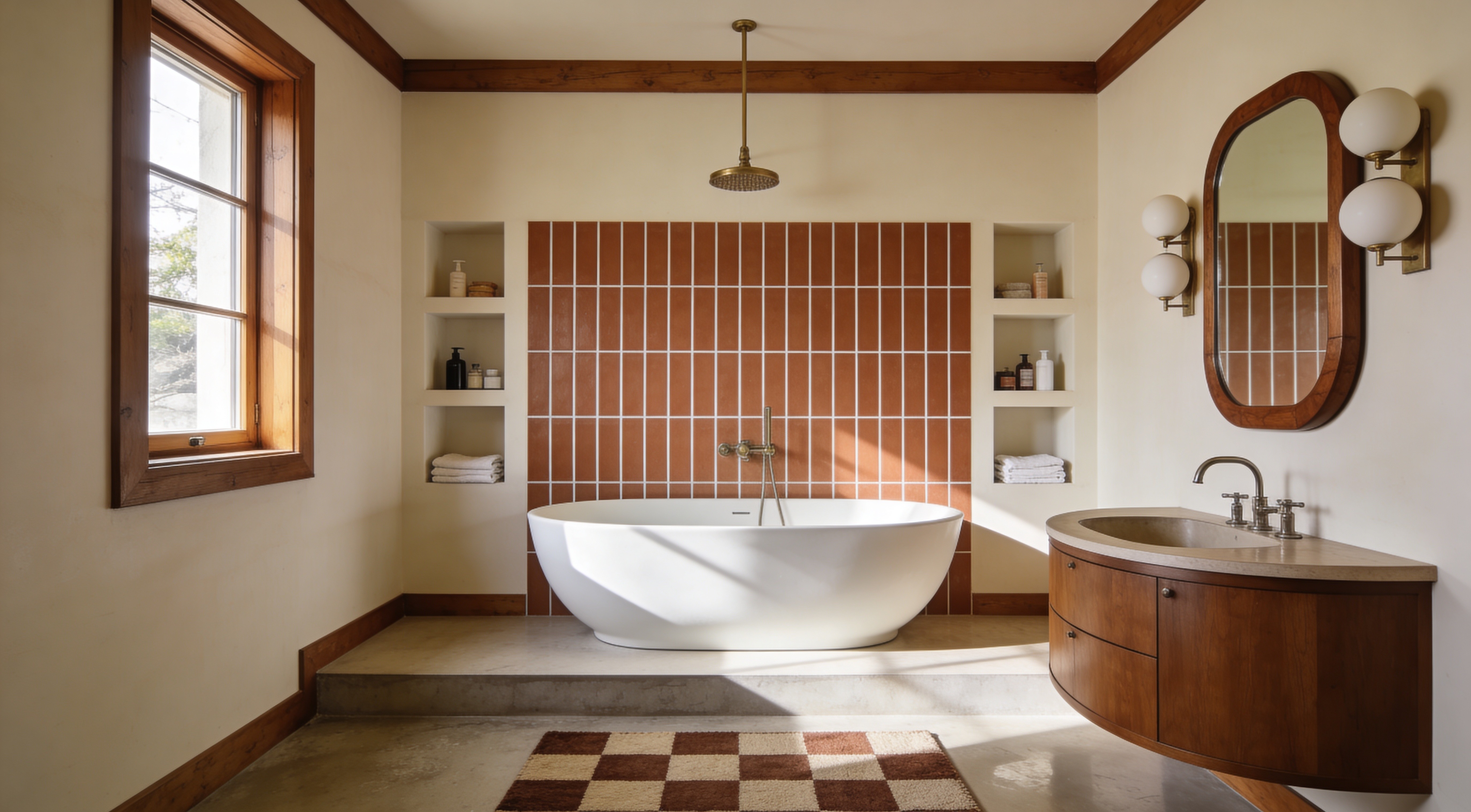

Your terracotta zellige shower — warm earthy glaze with sand-toned grout and bronze fixtures

Maintenance: the honest version

A sealed zellige shower needs resealing once a year. The product is simple — a dedicated tile and stone sealer, applied with a cloth, left to cure. It takes twenty minutes and adds two days where you should avoid using the shower.

The more common maintenance issue is limescale on the glaze. The uneven surface catches mineral deposits faster than a flat tile. Use a pH-neutral cleaner only — not anything acidic or abrasive. Vinegar, standard bathroom sprays and abrasive sponges will all damage the glaze over time.

Worth knowing A good squeegee after each shower is more effective than any cleaning product. Removing water before it dries prevents the majority of limescale buildup in the first place. With zellige — where water sits in the glaze variation rather than running straight off — squeegeeing makes a visible difference within a week.

Three mistakes

01
Mistake
Tiling every wall in a single saturated colour
Zellige is a strong material. In a standard bathroom — 4–6m², modest ceiling height — covering every surface floor to ceiling in deep green or ink blue tends to feel oppressive rather than designed. Most successful installations use zellige on one feature wall or limit it to the shower enclosure, with plaster or a quieter tile elsewhere.
02
Mistake
Buying from a photo without ordering samples first
Zellige colour is batch-dependent and heavily affected by your bathroom's light conditions. A forest green that reads as dark olive in a north-facing room with no natural light is the same tile that reads as vivid emerald in a south-facing room with a skylight. Order samples, wet them, hold them against your fixtures, and look at them at different times of day before committing to four square metres of supply.
03
Mistake
Using a tiler who has not worked with handmade tile before
The irregular size and thickness of zellige makes installation significantly more demanding than standard ceramic or porcelain work. A tiler who has not done this before will struggle with the setting out, back-buttering and levelling required. The material cost per square metre is high enough that correcting a poor installation almost always costs more than the saving on a cheaper quote.

Zellige is not a low-maintenance choice. It requires a qualified installer, proper sealing, and a degree of ongoing care that a plain porcelain tile does not. What it gives back is a surface that changes with the light, improves with age, and makes a bathroom feel less like a functional room and more like somewhere you actually want to be. For that, the extra effort is worth calculating properly rather than dismissing.